
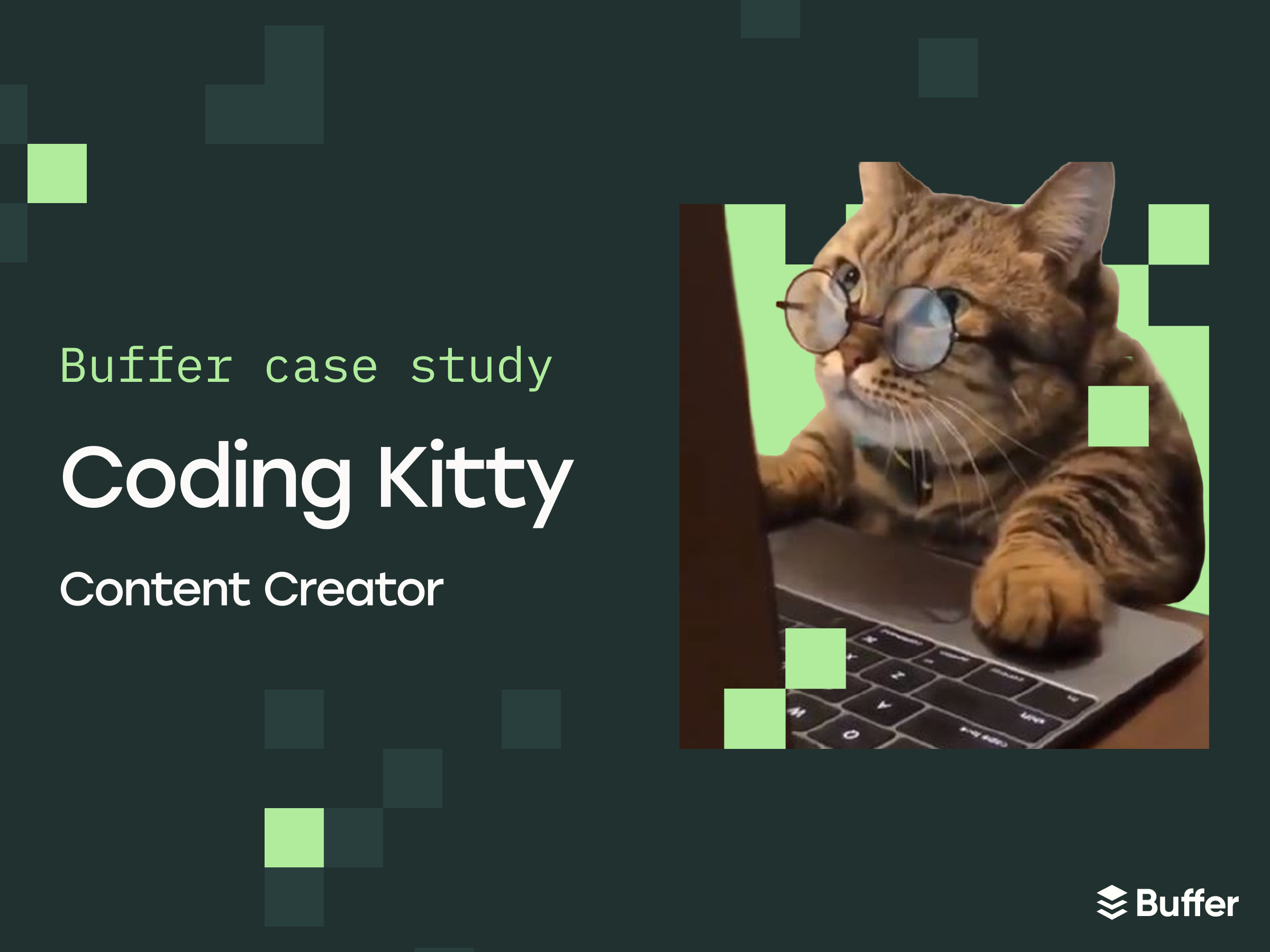
Sameer Ali is the sort of programmer that, when faced with a repeated task, constructs an application to fix it. He’s likewise a creator, publishing coding material on Instagram, TikTok, and YouTube under the name coding.kitty — and his build-an-app method was exactly how he got rid of almost all the admin from his social presence.
Previously, every ended up video indicated 15– 20 mins of busywork: downloading, re-uploading per platform, rewording captions, establishing metadata, scheduling, and by hand updating his job board. His personalized desktop computer application– the aptly called coding.kitty engine– totally transformed that. It takes care of the entire manufacturing pipeline from ideation and scripting with to subtitling, scheduling, and analytics.
But when it involved in fact getting the video clips onto Instagram, TikTok, and YouTube, also Sameer made a decision not to build that part himself. He transformed to Barrier’s API rather.
Why a full-stack designer chose not to build it himself
Sameer might have used Instagram, TikTok, and YouTube’s indigenous APIs. Yet that would certainly have implied three different OAuth flows, 3 various upload devices, 3 sets of rate restrictions, and a custom-made scheduler solution to keep everything operating on time. He explained it as constructing a whole item on top of the item he was already building.
Rather, Buffer takes care of all of it.
One GraphQL API, one auth circulation, and Sameer can pass YouTube titles, privacy settings, categories, Instagram Reel vs. blog post type, initial remarks, and TikTok titles via a solitary mutation. He had the full assimilation working in a few days.
“I want an assurance that my articles will be uploaded at the specified time,” Sameer says. “Barrier manages the organizing component reliably, and I can see every little thing in a schedule sight.”
He also suched as that the GraphQL schema covered whatever he required in one place: develop, remove, bring articles, fetch channels– without him needing to stitch together separate endpoints.
From 1 YouTube video to multiple messages in 2 mins
As a veteran maker and marketing expert, I’m can’t get over exactly how reliable Sameer’s app + Barrier API process is.
It starts when a video clip gets significant “all set to set up” in Jira. The coding.kitty engine picks it up immediately, downloads the subtitled video from the Jira attachment, and automatically resizes it to fit Instagram Reels’ vertical layout. The video clip submits to Sameer’s cloud storage space and comes to be accessible using a public URL.
From there, Sameer chooses the target platforms, creates a platform-specific caption (his built-in AI recognizes the personality limits and conventions for each system, so he’s not revising the exact same message 3 times), and scrubs through the video to select a thumbnail framework.
After that coding.kitty hits Buffer’s CreatePost GraphQL anomaly that includes the video URL, caption, thumbnail, and all platform-specific metadata. Buffer fetches the video from R 2, lines up it for posting, and the Jira ticket auto-transitions to the following column.
Two mins, done.
A schedule and smart message scheduling
If that weren’t enough, Sameer developed a couple extra helpful functions right into his application. For starters, his very own schedule sight.
coding.kitty also draws scheduled blog posts back from Barrier to present its own calendar view. Sameer can detect voids in his timetable, prevent posting problems, and reschedule material by dragging articles around– all without leaving his app.
And probably my preferred bonus offer attribute: An AI representative that makes all the choices around posting.
Due to the fact that coding.kitty has accessibility to recent messages, and the complete queue of video clips all set to go, Sameer can hand off the posting decision entirely to the agent. It examines what’s been posted just recently, picks the ideal web content, system, and timing, and routines it through the Buffer API.
Pretty cool, right?
Attempt it yourself
Sameer built a desktop application. You might construct a CLI device, a Slack robot, or an n 8 n operations. Whatever you develop, you can concentrate on that– the publishing piece is already solved.
Barrier’s API is now available You can begin building today.
Suggested Social & Ad Tech Equipment
Disclosure: We might earn a compensation from associate web links.
Leave a Reply