
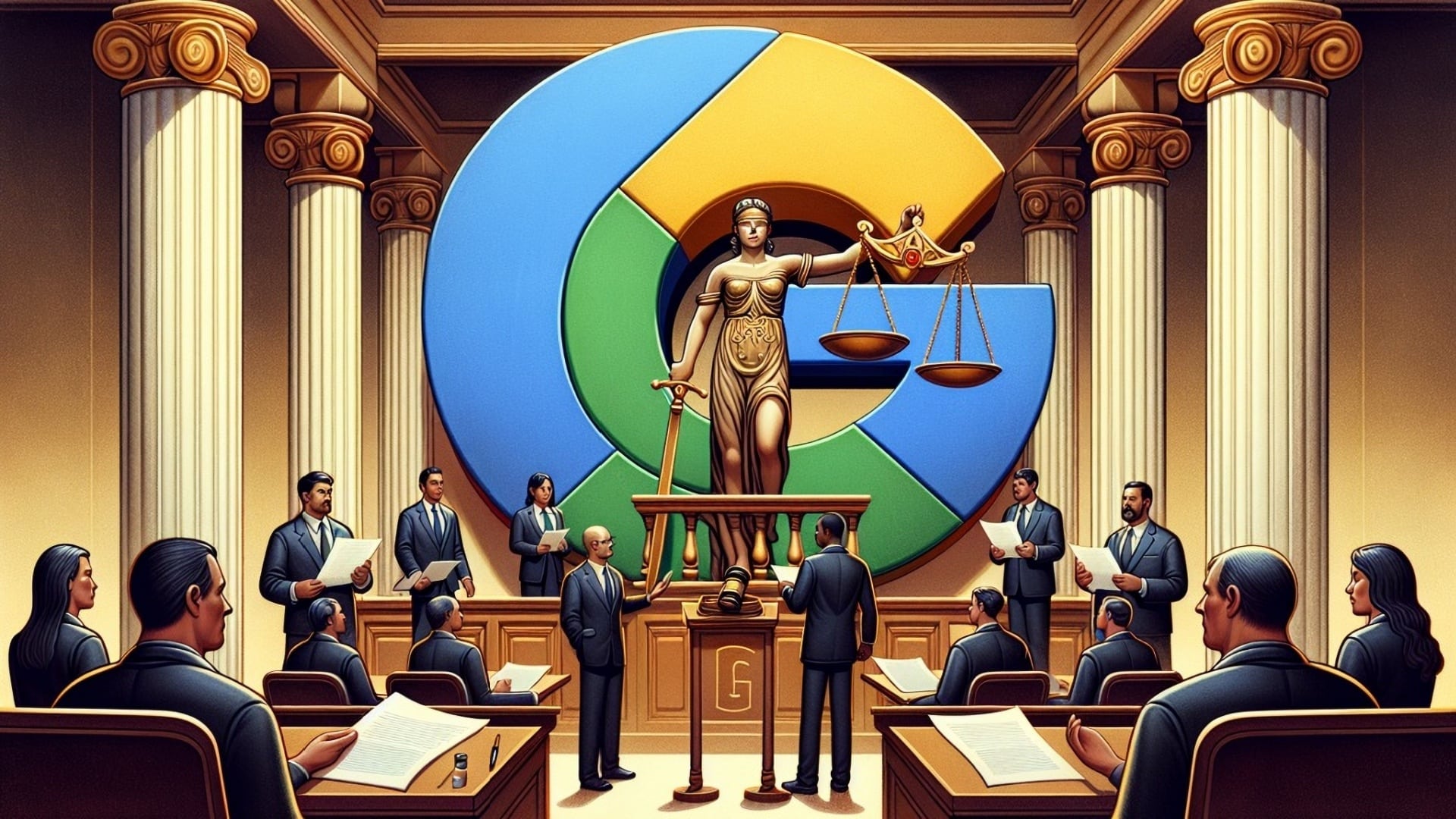
Once, the Justice Department’s ad-tech situation looked potentially deadly for a significant piece of Google’s revenue. The DOJ wanted a government judge to compel Google to offer its ad exchange, dividing parts of a system the court had already discovered unlawfully taken over online advertising and marketing markets.
Google shed the case, yet kept business.
United State District Court Leonie Brinkema rejected the government’s proposed breakup Wednesday, picking behavioral limitations created to alter exactly how Google operates its ad-tech equipment. This is the second time in approximately a year that a government judge found Google kept a prohibited monopoly yet didn’t dismantle it.
For marketers, that indicates the infrastructure underlying much of open-web advertising and marketing remains greatly intact. The more instant inquiry is whether the brand-new policies controling that framework produce enough competition to impact exactly how inventory is valued, acquired, and gauged.
Google maintains both sides of the market
The Justice Division filed a claim against Google over its ad-tech company in 2023, saying that the business utilized its control over several parts of the advertising and marketing supply chain to reduce competition. Brinkema ruled in April 2025 that Google illegally monopolized the publisher ad-server and ad-exchange markets and illegally connected both items with each other. The government stopped working to show a separate syndicate in advertiser-side tools.
That difference matters due to the fact that Google occupies an abnormally effective placement in between advertisers and authors. Its author modern technology manages the inventory offered for sale, while its exchange runs public auctions that attach that inventory with advertising and marketing need.
“The conflicts of passion are so glaring that a person Google employee explained Google’s advertisement company as resembling ‘if Goldman or Citibank possessed the NYSE,’” is exactly how Sen. Mike Lee (R-Utah) explained it in 2023
10 X your search engine optimization with Semrush for Business
The globe’s most powerful search engine optimization system, purpose-built for Enterprise.
Request demonstration
The Justice Department said that Google’s ownership of both pieces produced a structural conflict that behavioral restrictions might not appropriately take care of. It wanted Google to divest AdX, its ad exchange, and sought various other modifications planned to make it simpler for competing innovation to take part.
Brinkema considered a break up as well tough and possibly disruptive. Throughout the solutions test, she doubted that would certainly get the exchange and how it would run afterward, recommending that stopping the unlawful behavior might provide a more practical solution.
The precise regards to the ruling remain partly uncertain due to the fact that Brinkema’s complete viewpoint is temporarily sealed to allow the events to identify secret information. The general public order states she accepted the majority of the suggested behavior remedies, with alterations.
The public auctions must work in different ways
The adjustments could still be purposeful for the technicians of programmatic advertising and marketing.
The court previously located Google utilized methods referred to as “first look” and “last look” to prefer AdX. First appearance gave Google an early chance to purchase publisher inventory. Last look offered it details about completing proposals prior to it made its very own offer. Google had likewise imposed rates rules restricting authors’ capacity to set various minimum rates for different sources of need.
Those benefits are being restricted. Publishers will certainly get more pricing control, while competing author ad web servers are expected to receive Google’s AdX quote details in genuine time. The goal is to give various other ad-tech carriers an equal opportunity to complete for stock.
For advertisers, the impacts will primarily be a number of layers listed below the campaign interface. More competition amongst exchanges and publisher modern technology might eventually influence auction characteristics, supply courses, pricing, and the amount of advertising and marketing cash that reaches publishers.
Just how much modifications depends upon whether competitors can benefit from the new policies.
Google still possesses the dominant facilities. A behavior treatment can remove some advantages, however it leaves authors and marketers operating in the system that sustained Google’s syndicate.
That makes fostering an important procedure of whether the judgment functions. If publishers start using competing ad web servers or exchanges a lot more often, marketers could ultimately gain access to a much more affordable supply market. If authors mostly remain where they are, the public auction guidelines will certainly have transformed while much of the marketplace framework continues to be familiar.
Unlock your $ 1 M+ organic growth engine
Every little thing business groups require to expand visibility across search and AI.
Learn more
Don’t expect ad buying to alter over night
Marketing professionals most likely should not anticipate their programmatic projects to look considerably various next week.
Open-web advertising growth has actually already reduced as spending moved toward systems including YouTube, Instagram, and Amazon, a change sped up by Apple’s privacy changes limiting mobile monitoring.
That change also makes the timing of the situation significant. The federal government spent years prosecuting Google’s dominance of an advertising market that changed substantially while the situation continued.
The ruling might additionally make supply-path openness more important. Online marketers might intend to look more carefully at which exchanges and middlemans handle their spending, just how much of each marketing dollar gets to authors, and whether alternatives to Google’s pile come to be more feasible as the treatments take effect.
Google makes it through another breakup danger
This is about greater than marketing.
Google also lost the Justice Department’s different search-monopoly case, in which the government looked for architectural remedies, consisting of a possible sale of Chrome. In that case, united state District Judge Amit Mehta likewise turned down a breakup, rather imposing requirements including data sharing and adjustments in Google’s service practices.
That leaves marketers with an unusual end result. The court developed that important parts of the marketing market were misshaped by illegal monopoly conduct, but the company that developed and runs a lot of that market will proceed running it.
The behavioral remedies amount to an experiment: If competitors can use the available to take a significant quantity of business far from Google, then the experiment will be a success. Otherwise, then Google’s syndicate will stand.
It is now as much as various other businesses to conquer a system in which Google is lodged among publishers, exchanges, companies, and advertisers. That’s a huge ask, and it will certainly take a long time for it to pay off for any person that makes a decision to handle one of the globe’s largest organizations.
Judge Brinkema made a decision not to compel Google to market AdExchange because it would certainly have been “potentially turbulent.” However that’s why you do it. Monopolies do not finish themselves. The full ruling hasn’t been revealed yet; nevertheless, unless there is something truly large in it, this treatment appears to be no remedy at all.
Recommended Social & Advertisement Tech Equipment
Disclosure: We may earn a payment from affiliate web links.
Leave a Reply