
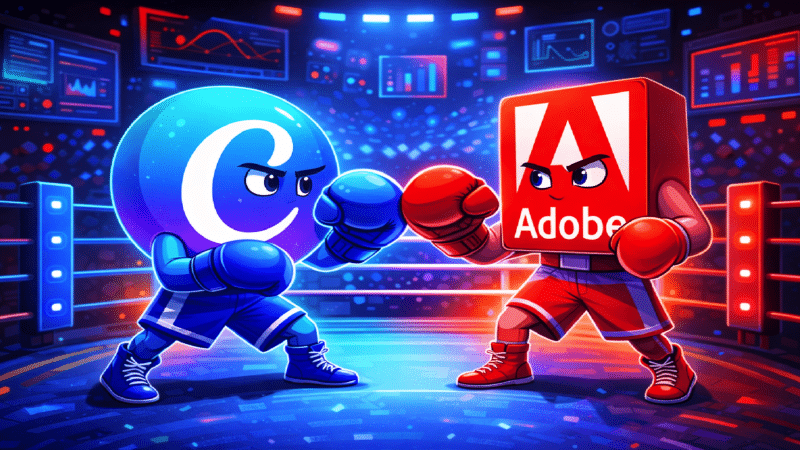
Adobe and Canva are heading parallel, also if they are taking very various paths to arrive. Both business presented significant AI updates in the past 24 hours, and both are attempting to redefine exactly how creative work actually obtains done.
At the facility of both launches is a change in interface. Design is coming to be something you motivate rather than something you manually construct, which transforms exactly how promptly work happens and who can do it.
Adobe’s Firefly AI Assistant update can act within Creative Cloud, relocating past generation into implementation. Canva’s AI 2.0 leans right into prompt-based editing and enhancing throughout its system, making design really feel even more like a conversation than a procedure.
The destination coincides, however the routes are extremely various.
2 techniques, exact same location
Adobe is improving an intricate ecosystem, adding an AI layer that assists power users relocate faster while keeping control over detailed process. The assistant can modify documents, coordinate steps and move between devices, which strengthens the deepness Imaginative Cloud is recognized for.
Canva is doing what it has actually always done, simplifying the experience so individuals do not have to think of just how the job obtains done. You describe the result, and the system handles the mechanics behind the scenes.
That difference has not disappeared with AI, and if anything, it is becoming much more evident as both platforms evolve. Adobe is prolonging expert capacity, and Canva is increasing accessibility.
Your consumers look anywhere. See to it your brand name programs up
The SEO toolkit you recognize, plus the AI presence data you need.
Begin Free Test
Begin with
This rivalry is extra extreme due to the fact that it nearly vanished. Adobe’s effort to get Canva was blocked by regulators, leaving both business to contend directly. Since then, both have actually accelerated their roadmaps. Adobe is adding automation without losing its professional base, and Canva is including ability without giving up simplicity.
They are not meeting in the middle, yet they are obtaining more detailed from opposite instructions as each expands into the various other’s territory.
What marketing experts ought to anticipate
For marketers, the changes turn up swiftly in everyday work. Relocating from concept to possession is faster, developing variations is easier and projects can be created with fewer handoffs.
That does not get rid of intricacy even change it. The difficulty relocates from generating properties to deciding what to generate, aligning teams and preserving consistency across a greater volume of output.
It additionally raises questions about control, because even more people can produce even more content without constantly adhering to the same criteria or procedures.
The interface is the battleground
The bigger shift is how these tools are being used, with interfaces moving away from menus and layers and toward systems that translate intent. Instead of browsing attributes, customers define what they want and allow the platform find out just how to deliver it. Call it Ambiance Designing.
As that happens, competition comes to be less regarding function checklists and even more regarding just how well each platform comprehends and carries out individual intent. That is where both business are focusing their efforts.
Adobe is betting that depth integrated with automation will win over professional users, while Canva is wagering that speed and simplicity will scale across a broader audience.
In either case, creative job is approaching a version where you explain the result as opposed to construct it step by step, and both companies are attempting to specify what that future looks like.
Advised Social & Ad Tech Tools
Disclosure: We may earn a compensation from associate web links.
Leave a Reply