
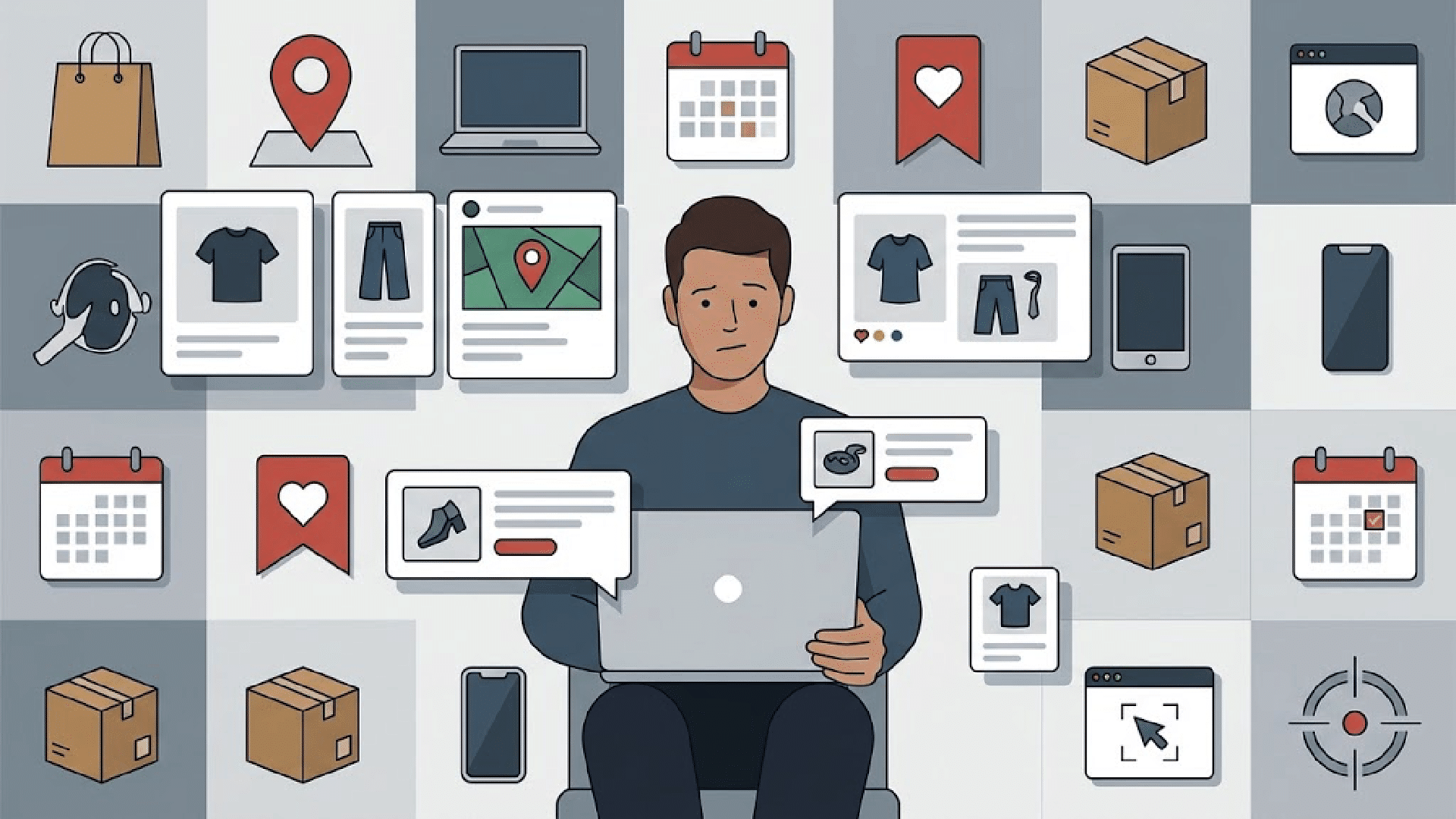
Personalization can make the consumer experience better, but it can also make consumers ask yourself how much you find out about them. The line comes down to whether the customer anticipates the personalization, sees a clear advantage, and really feels comfy with the data behind it.
A couple of weeks earlier, I was searching online for something I needed for a future journey. I considered a number of alternatives, closed the tab, and carried on.
Within hours, the item was anywhere. It followed me to Instagram, appeared in an additional internet site’s ad stock, and landed in my inbox. Then came one more recommendation based on something I would certainly bought months previously.
As a result of my specialist history, I recognized precisely what was occurring. The systems functioned, the information was linked, and the targeting did what it was designed to do. As a client, it felt like a lot.
That stress is where personalization gets made complex. Marketers can personalize based on what someone browsed, bought, clicked, abandoned, viewed, downloaded and install, and sometimes what we predict they’ll do following.
Choosing whether we ought to use that information calls for a lot more judgment. Great personalization makes an experience less complicated, faster, or more relevant. Press it too much, and customers begin asking yourself how much you learn about them.
The complying with concerns assist you make a decision whether a customization possibility belongs in the client experience.
1 The assumption examination: Would the client anticipate this?
Ask: Would a reasonable client anticipate us to recognize and use this information in this context?
Begin with the signal behind the customization. A person acquires running footwear and gets referrals for running socks. A person downloads a business protection guide and gets follow-up web content concerning cybersecurity. Both activities produce easy to understand reasons wherefore occurs following.
10 X your SEO with Semrush for Enterprise
The world’s most effective SEO platform, purpose-built for Venture.
Request trial
After a single product-page visit, highly details messages throughout e-mail, paid social, and present advertising may leave the client wondering what caused that degree of focus.
Map the experience prior to launch: Customer action → Information gathered → Individualized reaction.
After that ask whether the consumer intentionally produced the signal, whether the response makes sense in that context, and whether the stamina of the personalization matches the strength of the signal.
An acquisition, specific preference, or finished form provides you a more powerful basis for personalization than a few secs of searching actions. One web page sight may sustain a subtle suggestion. Repeated actions might support a stronger feedback.
For each new personalization tactic, file:
- The signal: What did the consumer do or tell us?
- The reasoning: What are we assuming based on it?
- The response: What will we change?
Pay particular focus to the inference. Deal with separated actions as limited evidence. A pricing write-up might mirror basic study, a careers web page visit can originate from a prospect looking into the business, and 2 item sights might stand for very early expedition.
Maintain the interpretation proportionate to the habits. Consumers need to have the ability to comprehend why an experience is taking place without requiring to recognize your information infrastructure.
2 The significance test: Does the data enhance the experience?
Ask: Does utilizing this information meaningfully improve the experience?
Customization often begins with capacity. A CRM area exists, so it obtains placed right into an e-mail. Behavior data is available, so one more section gets created. A suggestion engine can generate individualized offers, so teams find more locations to use them.
Client data becomes valuable when it contributes something meaningful to the experience.
Try to find personalization that aids somebody complete something: discover a relevant item faster, proceed an unfinished task, avoid pointless offers, find helpful material, or receive a timely suggestion.
An easy workout can assist. Complete this sentence: “We are using this consumer information so they can ________.”
Specify.
- “We are utilizing purchase history so consumers can swiftly reorder products they get frequently,” determines a customer advantage.
- “We are utilizing purchase background to raise repeat purchases,” determines a business objective.
You desire both. Define the customer outcome first, then figure out whether the personalization also adds to your marketing objectives.
After that ask: “Would the experience still function without this information?”
You might uncover that a wide choice gives sufficient context. A consumer’s mentioned sector, for example, might be sufficient to tailor B 2 B web content without layering on countless behavioral and intent signals.
Specify the designated customer outcome before launch and gauge it together with project KPIs. Did clients locate products faster? Did more people continue a disturbed task? Did unimportant suggestions lower?
Personalization earns its location when the information develops recognizable worth.
3 The comfort test: Exactly how individual does the data feel?
Ask: Is the value we’re developing worth the sensitivity of the info we’re utilizing?
Clients might be comfortable with brands bearing in mind product choices, garments sizes, or previous purchases. Wellness worries, monetary scenarios, family members info, specific place, and inferred behaviors can be more delicate.
Evaluate that level of sensitivity along with the worth you’re creating. Just how individual would certainly this information really feel to the customer? How much worth does utilizing it produce for them?
As sensitivity rises, use higher scrutiny to the usage case. Think about exactly how the client offered the information, whether they would certainly expect it to influence this experience, and whether a much less sensitive signal can complete the very same objective.
Inferred data deserves specific focus due to the fact that behavior can support multiple descriptions.
Somebody investigating a medical condition may be helping a member of the family. Somebody seeing costly items may be purchasing a present. An individual reading content about economic difficulties may be doing expert research study.
Prior to activating sensitive or presumed data, ask:
- What exactly are we inferring?
- Just how confident are we?
- What client value depends on it?
- Could a much less delicate signal work?
- What would take place if our assumption were wrong?
Include a final digestive tract check: Exactly how would I feel if a brand name utilized this information to individualize an experience for me?
That question complements your privacy reviews, approval demands, and information administration with an assessment of the experience itself.
Transform the three examinations right into a decision
Now put assumption, importance, and convenience into your campaign preparing procedure. An easy racking up model is enough. Price each personalization usage case high, medium, or reduced throughout the three criteria.
- Expected: Would clients reasonably expect this data to be utilized by doing this?
- Relevant: Does using it materially boost their experience?
- Comfy: Is the value proper for the level of sensitivity of the info?
The mix tells you what to do following.
A technique that ratings high throughout all 3 has a strong foundation.
- High relevance + reduced assumption: Evaluation the data source, openness, and permission.
- High expectation + reduced relevance: Remove customization that does not add adequate worth.
- High significance + reduced comfort: Search for a much less sensitive signal that can support the experience.
- Multiple reduced ratings: Rework the usage instance before activation.
Include these rankings to project briefs, personalization requests, or martech consumption types, along with the signal, data resource, planned client advantage, and the metric you’ll make use of to examine the experience.
Establish what occurs at each rating: high ratings might relocate right into screening, tool ratings could require added testimonial, and low expectation or convenience ratings need to send the usage situation back to the team.
This creates a deliberate decision point in between having customer data and choosing to utilize it.
Allow customers shape the experience
Marketing professionals spend a great deal of time presuming what people want from behavior information. Give consumers possibilities to inform you directly.
Choice facilities are a great starting factor. Allow individuals pick topics, products, or interaction frequency. Permit them to dismiss pointless suggestions, upgrade interests, and understand why they’re seeing certain content.
These choices likewise aid correct inaccurate assumptions.
A person clicking a post once may require an answer to one question. A present acquisition may claim a lot more about the recipient than the buyer. A B 2 B customer might download web content for an associate.
Produce a customization loophole that represents those opportunities: Ask → Learn → Personalize → Observe → Change.
Review your existing experiences and identify areas where you can change or supplement a reasoning with an explicit preference. Give customers a means to update those choices and lug their options throughout channels anywhere functional.
Specific choices give behavior signals and valuable context, assisting you distinguish a passing activity from genuine passion.
Use what you recognize with restraint
CDPs, identity resolution, behavior analytics, and AI can connect much more customer signals than online marketers could reasonably make use of in every communication.
The duty hinges on choosing which signals belong in the experience.
Prior to turning on an additional audience, behavior trigger, or information source, go back to the three questions:
- Would customers sensibly anticipate us to use this information right here?
- Does utilizing it meaningfully enhance their experience?
- Is that worth ideal for exactly how personal the details really feels?
Make use of the solution to determine what reaches the consumer. Advertising and marketing modern technology will continue providing us more info and even more means to act on it. Solid customization depends upon using judgment to those capabilities.
Maintain asking one question: Does understanding this aid us develop an experience the customer would actually desire?
Utilize the details that gains a yes.
Recommended Social & Advertisement Tech Equipment
Disclosure: We might gain a compensation from associate web links.
Leave a Reply