
Every time one more state passes a personal privacy legislation or amends an existing one, brands need to tighten and upgrade their supplier agreements.
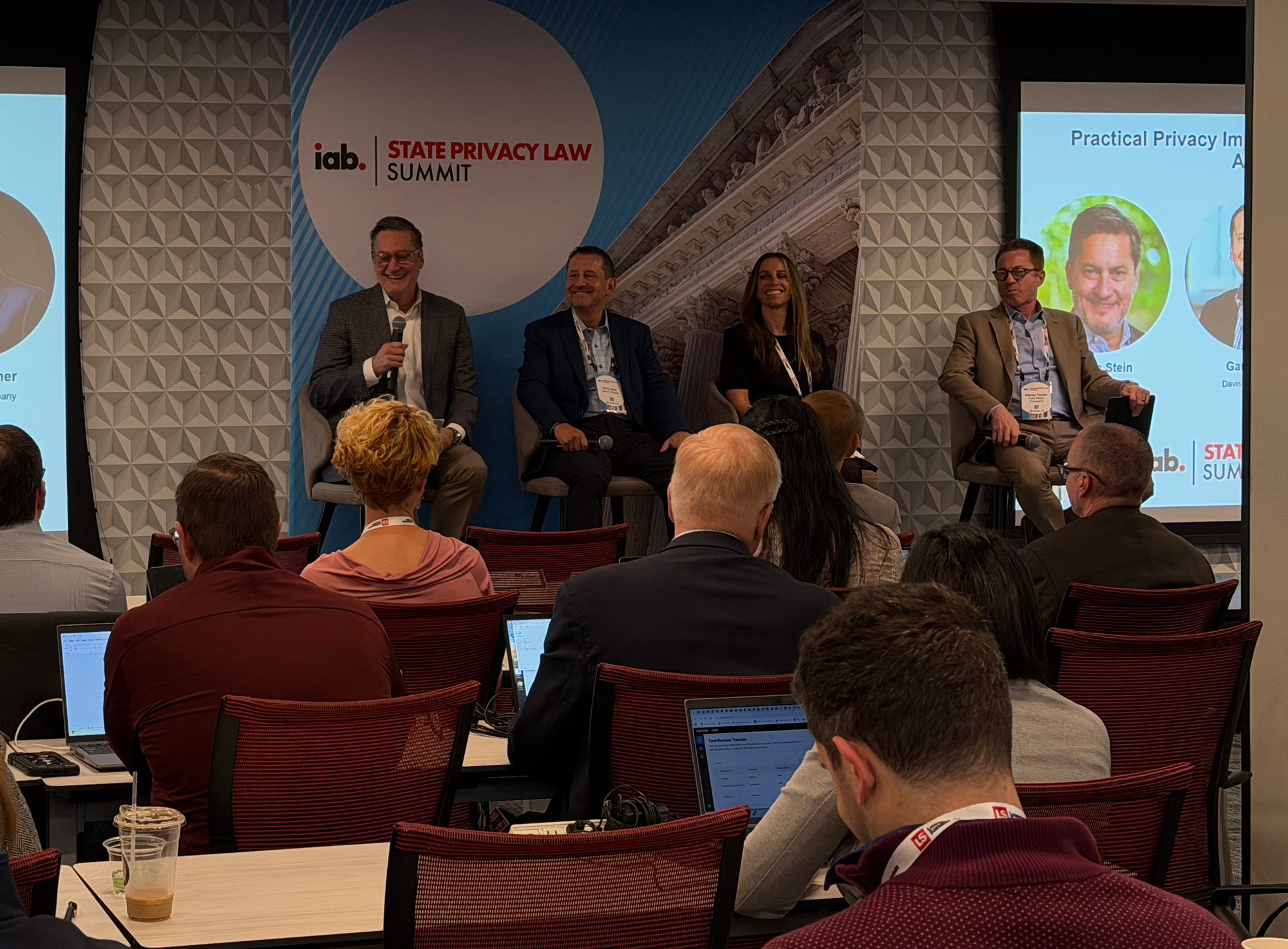
“If you’re operating throughout state boundaries, your data goes almost everywhere,” said Patrick Turner, lead guidance for data and privacy at Ford Motor Business, talking at an occasion organized by the IAB in New York City this week focused on state privacy legislations.
Therefore it makes good sense for agreements to constantly meet the strictest mix of state needs.
However it’s a massive task, and everybody– coworkers, companions, advertisement suppliers– want to know why an agreement that’s helped years instantly needs a reword, Turner claimed. They maul him with inquiries.
“Occasionally I’ll simply switch off the microphone and howl right into the wall surface briefly,” Turner joked, “due to the fact that nobody hears you when you yell precede.”
Jump to it
The most recent enhancement to Turner’s ever-growing to-do list comes courtesy of Delaware.
In very early September, Delaware Gov. Matt Meyer authorized HB 380 , a change to the state’s personal privacy legislation that works on Jan. 1, 2027, and makes due persistance mandatory.
Under the new statute, companies can no more assume a partner follows privacy regulations even if it says so.
Prior to sharing individual data with a 3rd party, business need to now verify the companion can actually meet its privacy obligations, utilizing sets of questions and record testimonials at a minimum. They likewise require a binding data-use contract in place. And it reduces both methods: 3rd party of any dimension are required to cooperate with the due persistance process, and without a contract they aren’t enabled to refine information in any way.
In programmatic advertising, though, vetting every companion in the supply chain would be a substantial migraine. A solitary advertising campaign can jump data in between dozens of intermediaries, dimension suppliers and tracking pixels.
And if every business in the chain sends every partner its very own custom-made survey, said Michael Hahn, the IAB’s SVP and basic guidance, “we drown ourselves in documents, and no one is any type of safer.”
Yet the sheer range and intricacy of ad technology doesn’t offer firms a pass, said Delaware Deputy Attorney General John Eakins, who leads personal privacy enforcement for the state’s AG’s office. Sharing data via a substantial programmatic network just enhances the threat to customers, he added.
“It requires a contract at each hop,” Eakins said, “because each hop is a purchase entailing personal information.”
Confirm it
In other words, the days of box-ticking and boilerplate are lastly over.
Documents isn’t conformity, stated Courtney Cantor, replacement general advise at PubMatic, that frequently areas a stable stream of due diligence demands.
In time, the inquiries have actually advanced from standard stuff, like the phrasing of a personal privacy plan, to questions regarding exactly how the information circulations, the length of time it’s maintained and exactly how opt-out signals obtain passed downstream.
“It’s no more about just putting the ideal agreements in place,” Cantor claimed, “however really having proof to reveal if a regulatory authority came knocking on your door.”
Although that’s thinking contracts show truth, which typically isn’t the situation.
Take the typical clause calling for a vendor to erase whatever when a client contract is ended, claimed Gary Kibel, a partner at Davis+Gilbert. Not just do most companies not bear in mind to do that, it’s often difficult.
“I can not erase every little thing” is the correct action to any type of removal request, Kibel said, due to the fact that vendors have legal and record-keeping responsibilities of their very own. In addition to that, if businesses purge all of their data, they can’t do business. If you erase a client’s email address, for example, after that exactly how do you chase an account payable?
The fact is, handling retention– which Turner referred to as “the ‘R’ word”– is borderline impossible, he stated.
“Everyone places it in their contracts, everybody claims the length of time they’ll keep points,” Turner stated. “But I guarantee that if I went to every individual in this area’s business and considered your data, I ‘d find retention violations all over.”
It’s not harmful or anything, it’s simply unbelievably difficult to do. “I do not indicate to motivate any type of attorney generals of the United States,” Turner stated, “yet I think it’s an area most of us have to be really careful regarding going forward.”
Sweat the tiny stuff
Although there’s a heck of a lot of low-hanging fruit to pursue first. You have actually got ta get the fundamentals sorted or you could be screwed.
As an example, make certain that your Global Privacy Control signal is functioning properly, which your privacy plan points out all of the appropriate states.
Eakins said that a person of his largest family pet peeves is when a privacy policy includes a listing of states with personal privacy legislations, yet fails to point out Delaware. There’s no state regulator available that does not feel similarly. “You will certainly get a letter,” Eakins stated, jokingly (but likewise not kidding).
And Kibel can confirm.
“I had a customer regarding a year ago that obtained a letter from the Delaware attorney general’s office and they elevated that problem,” he said.
So do not give regulators an excuse Due to the fact that if they find one issue, Turner said, they’ll possibly continue digging– and after that suddenly you’ve obtained regulatory authorities in your pixels and cookies, finding personal information you didn’t understand existed, he said, “and you’re like, oh crap.”
“The basic, easy things,” Turner said, “don’t let them be an issue.”
And additionally do not forget that regulators are additionally just individuals, he said– individuals who read the information. When one company obtains filed a claim against or fined, various other states take notice and start questioning whether the same thing is happening in their yard.
Keep it friendly
Not that getting a letter from a regulator is necessarily a DEFCON 1 situation.
These types of inquiries can feel terrifying because they usually contain thorough inquiries, Kibel said. Regulators do their research prior to connecting. But a letter isn’t an official lawful demand, and business do not technically have to react.
It’s constantly a great idea to involve, however, Kibel claimed.
Overlooking outreach from a regulator is a proven means to turn a voluntary back-and-forth right into a subpoena.
Kibel has put clients on the phone with regulatory authorities in the past, and the ambiance was usually as pleasurable as might be anticipated. “It had not been dealt with like a deposition,” he stated, “and it wasn’t an aggressive setting.”
Since regulators do “comprehend that every system is not 100 % excellent,” Kibel stated.
“However they also do want to see that you’ve thought about these concerns beforehand,” he said, “and that you’re being forthright with them in terms of answering their inquiries.”
Preferably, the whole thing obtains worked out over a couple of phone calls and never ever escalates.
Similarly, the objective of Delaware’s HB 380 isn’t for the AG’s office to ferret out and investigate each and every single 3rd party, Eakins stated. The hope is that business and their advise do the policing themselves.
“The objective is for the sector, for you all, to be stating, ‘You recognize what, this counterparty is just way too much of a high threat,’” Eakins stated. “I do not trust what they’re finishing with the information, so we’re simply not mosting likely to take that reputational threat.”
Suggested AI Advertising And Marketing Devices
Disclosure: We might earn a commission from affiliate links.
Original coverage: www.adexchanger.com
Leave a Reply