
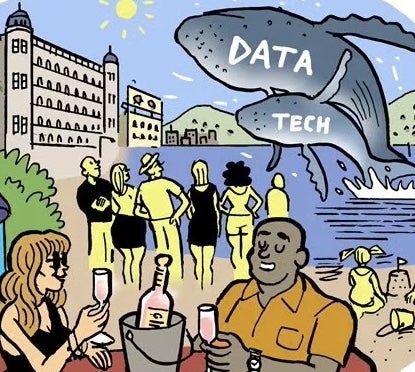
For years, ad agency holdcos have been completing to build the most effective data and tech heaps.
Rapid onward to today, and agencies are seeking to differentiate their tech stacks by developing custom-made agentic AI tools for their brand clients. And they seem less curious about possessing the information that powers the AI. They’re even reconsidering owning the AI devices themselves– specifically given that accrediting them to customers creates brand-new earnings streams.
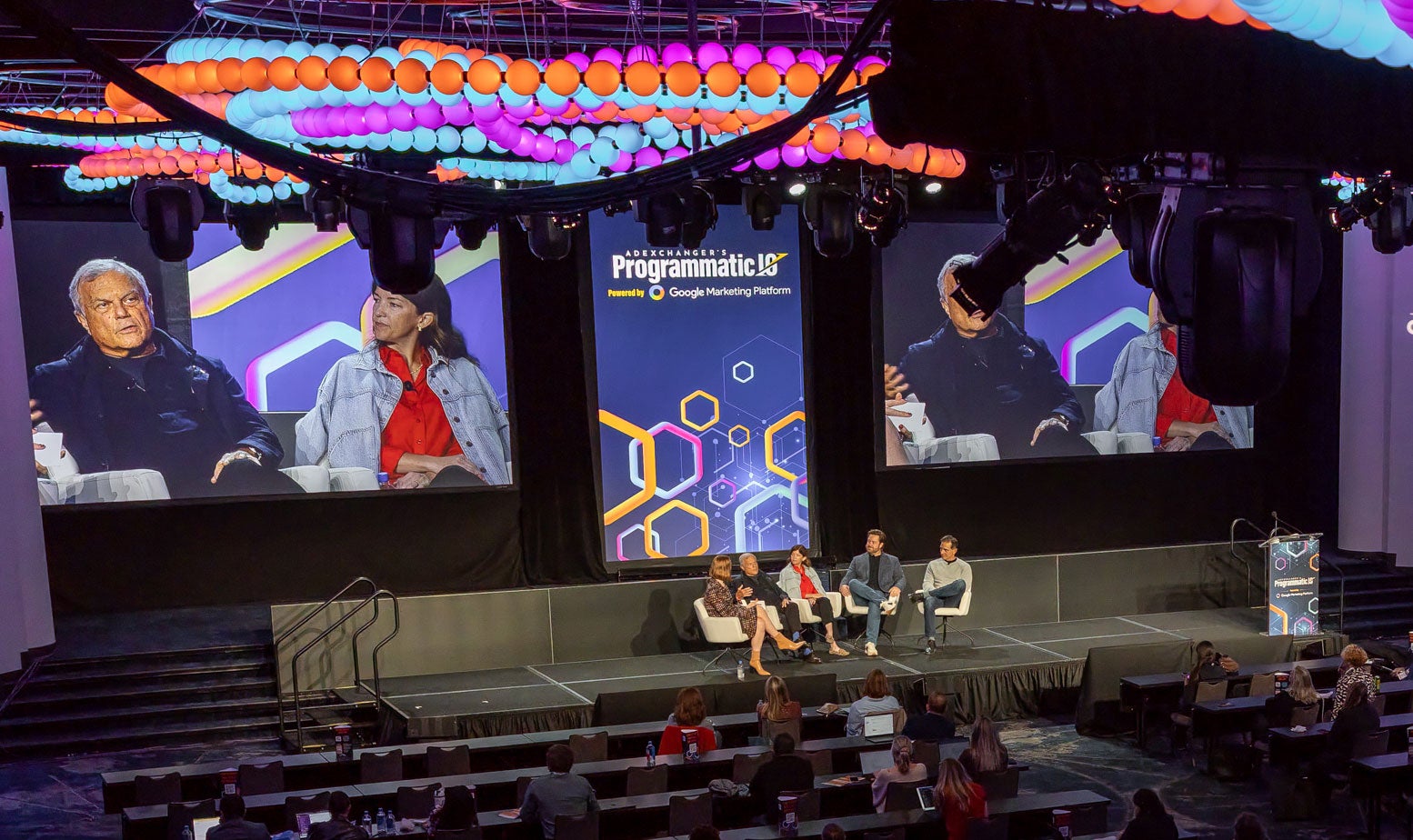
A lineup of company hefty hitters discussed the transforming buy-side landscape at Programmatic IO in New York City City on Monday. The panel consisted of Sir Martin Sorrell, founder and Exec Chairman of S 4 Capital, which possesses Monks; Bob Lord, head of state of Perspective Media; Maggie Summers, primary experience officer at dentsu; and Shane McAndrew, primary data and modern technology police officer at WPP Media.
Who possesses the data?
Agencies having information develops more migraines than it’s worth, the panelists largely agreed.
“Possession of data brings troubles,” Sorrell said, since it opens up companies approximately accusations that they’re rating their own research.
Meanwhile, marketers are constantly cautious of black boxes when it involves their project optimization. And, with dentsu anticipating formulas to drive 75 % of ad invest by 2028 , Sorrell stated, it’s placed even more pressure on companies to prioritize openness and nonpartisanship in just how they work with data companions.
This change seems to throw the current pattern of firm holdcos acquiring up data and modern technology systems. Publicis’s innovation strategy– including its 2019 procurement of Epsilon to combine customer data throughout its business– placed it at the front of the holdco arms race at the end of 2024, according to investment expert Terrence Kawaja However Publicis’s competitors alluded to its ad technology acquisitions as a responsibility on the Prog IO stage this year.
For example, Sorrell really did not skip an opportunity to try Publicis’s organized purchase of alternative ID and audience information company LiveRamp and whether that relationship makes LiveRamp less of an objective source of reality. When AdExchanger Content Supervisor Sarah Sluis asked Sorrel how he would certainly suggest a customer to collaborate with LiveRamp as soon as Publicis’s acquisition of the company closes, he responded, “We would certainly advise clients work with the most effective possible option.”
Perspective Media is similarly backing away from information ownership, according to Lord. He claimed, when it involves the company’s blu. AI platform , the brand name client owns the underlying information and additionally has any kind of AI versions produced on top of that data.
“The client needs to keep that information possession, because after that, if you ever before have a separation, the firm can not take that information with them,” Lord claimed. He included that he’s seen brand and agency separations throughout his occupation where the agency has actually taken the brand’s data and used it for a competitor’s project– which, he added, is generally like taking a client’s concepts and handing them over to a competing company.
And, as agentic AI fostering grows, Lord claimed he’s likewise seen various other companies deal with the AI tools built on customer information as the firm’s IP that can be made use of for other projects. “That’s not appropriate,” he claimed.
What changes the FTE version?
In addition to attending to just how AI is altering information collaborations, the officers weighed in on exactly how AI is changing how agencies work at even more basic levels.
For example, AI is currently changing how companies work with DSPs, claimed WPP’s McAndrew.
“If you consider who is making use of DSPs, we’re starting to see it’s much less human and a lot more machine, which is wonderful,” he said. “We can go agent-to-agent and get more intelligence than we have actually gotten out of those DSPs faster.”
Yet, he added, AI is likewise a danger to DSPs due to the fact that it makes it simpler for purchasers to obtain solid information signals from SSPs and the publisher side, cutting out DSP data marketplaces in the process. “There’s constantly pressure to press [via] supply chain optimization and locate efficiencies, and you’re visiting AI increase that.”
Agencies are under pressure from AI, as well, Sorrell stated. He pointed to Meta’s strategies to create an end-to-end creative, planning, purchasing and distribution platform as an existential danger to the venture agency design. He anticipated firms will certainly need to pivot to close collaborations with Huge Tech’s end-to-end version, and after that “the agency will progressively end up being the validator for that design.”
In that globe, though, the tradition company FTE settlement design, where companies bill based upon the amount of people are appointed to a customer account, makes less feeling, Lord stated.
However, agencies have to resist need to see AI and the automation of manual advertising jobs as a chance to offer client financial savings by reducing head count, McAndrew stated.
“We’re not going to cost reduce our method to growth, and we’re squarely in the growth company for our clients,” he stated. “We will recognize the high-volume, low-value courses, and we’ll automate that– that will simply obtain done. Yet 95 % of our emphasis at WPP is on supplying the right set of knowledge to our customers to drive that development, procedure that development and validate it.”
As opposed to FTE-based rates, Sorrell supported for firms to move toward outcome-based pricing for campaigns.
For his part, Lord suggested firms to “develop a P&L focused around the customer, not the silo.” He stated Perspective’s collaboration with Havas, called Horizon Global , focuses on very closely serving big international customers.
There’s a possibility for agencies to concentrate much less on handled services and to prioritize “extra hands on key-board”– or, in other words, licensing software application directly to customers, Lord claimed. He included that introducing new agentic user interfaces permits firms to “bill our clients for something really concrete that they’re logging into.”
However, Lord added, “the inertia in the system, the FTE-based version which the specialists put us on, harms us” and stops firms from changing to newer service designs.
While change takes some time, outcomes-based models will eventually win out, claimed dentsu’s Summers. Dentsu is currently operating a mix of the old FTE-based version while try out brand-new outcomes-based approaches, she stated.
“It’s this crossbreed of spending for the knowledge, for individuals who are generating the ideas, developing the experiences and orchestrating them,” she stated, “and after that have a version for results to make sure that we share and value the value of that outcomes-driven version.”
Advised AI Advertising And Marketing Equipment
Disclosure: We might gain a payment from associate web links.
Original coverage: www.adexchanger.com
Leave a Reply