
Programmatic advertising and marketing made media buying scalable but at a cost: Standardized impression public auctions usually cover a publishers’ distinct value, while an intricate supply chain consumes virtually half of advertising and marketing invest.
Currently, agentic AI guarantees something much better: the speed and scale of programmatic combined with the modification and straight partnerships of conventional media purchasing. And eliminating unneeded intermediary costs is the cherry on top.
That’s the vision behind Optable’s new Agentic Market, introduced October 8 at Optable Attach 2026 in New York City City. The system attaches buyer and vendor AI agents, and their information, to automate the discovery, product packaging and getting of author inventory.
“Programmatic solved the trouble of scaling purchases, but at the same time, we shed a lot of the context and cooperation that made direct advertising valuable,” said Bosko Milekic, Optable’s co-founder and chief product policeman. “Agentic AI provides us a chance to scale those one-to-one discussions– and fundamentally rethink exactly how marketing is bought and sold.”
Bringing purchasers and sellers together– at range and rate
Direct advertising deals traditionally call for extensive back-and-forth in between agency coordinators, publisher sales groups and advertisement procedures staff to determine supply, construct target market packages, discuss terms and execute orders. That manual work makes tailored offers challenging to range for publishers– and economically not practical for numerous advertisers.
Optable desires AI representatives to automate the publisher-to-buyer conversations– maintaining the customization of straight offers without the manual work that has actually historically restricted their reach.

In the Agentic Industry, authors plan stock, audience information, targeting options and prices right into advertising products that customer agents can find. Those agents analyze project briefs, connect to advertiser information and identify appropriate offerings.
Buyers attach their own agents through a solitary assimilation, and those representatives can then set up media strategies and submit orders straight to authors, who preserve control over prices, purchaser qualification and offer authorizations. Accepted orders flow into existing advertisement web servers for review and implementation.
At Attach, Paul Frampton-Calero, chief executive officer of independent media company Goodway Team, described how agentic modern technology increased campaign implementation: “We basically developed the entire rundown, motivated it, and it went all the way via to the acquiring representative. The entire thing was drawn from start to QA in the area of, I assume, 30 mins.”
The marketplace additionally provides authors visibility right into buyer demand, including briefs that do not match their existing marketing items. Those insights can educate brand-new offerings based upon actual advertiser demand.
“It’s not around just throwing your supply against the wall surface any longer,” said Amanda Martin, chief earnings officer at Mediavine, throughout a panel at Optable Connect. “It has to do with merchandising your supply and providing it in various methods to make sure that purchasers can pick what they want.”
Making direct marketing available to extra purchasers and sellers
By automating dealmaking, agentic AI can significantly broaden which products obtain offered, which authors can offer them and which advertisers can pay for to acquire them.
Costs sponsorships, homepage takeovers, custom audience packages and various other products that don’t fit neatly into traditional programmatic workflows could appear for automated, on-demand purchase by purchaser agents– without weeks of settlement or arrangement.

This modern technology will not get rid of the need for human judgment and connections. Optable’s VP of Item, Andy Sharkey, highlighted that authors will certainly still need to express what makes their target markets beneficial, establish rates strategies and build count on with buyers.
But smaller sized authors can get to extra marketers without developing huge sales and advertisement ops teams, and larger publishers can scale tailored offerings beyond the significant purchasers that generally validate the hands-on effort.
It additionally changes the business economics for purchasers. With AI agents handling the work of structure tailored straight campaigns, marketers might discover extra authors and set up customized campaigns without all the admin expenses. This would certainly broaden the marketplace for straight marketing, offering advertisers useful access to premium stock and publisher data regardless of the dimension of their budget or media team.
Reconsidering the advertisement technology tax
Optable is likewise testing the economics of marketing deals: According to eMarketer information provided at Connect, roughly 41 % people real-time bidding process digital display screen spending goes toward programmatic fees in 2026
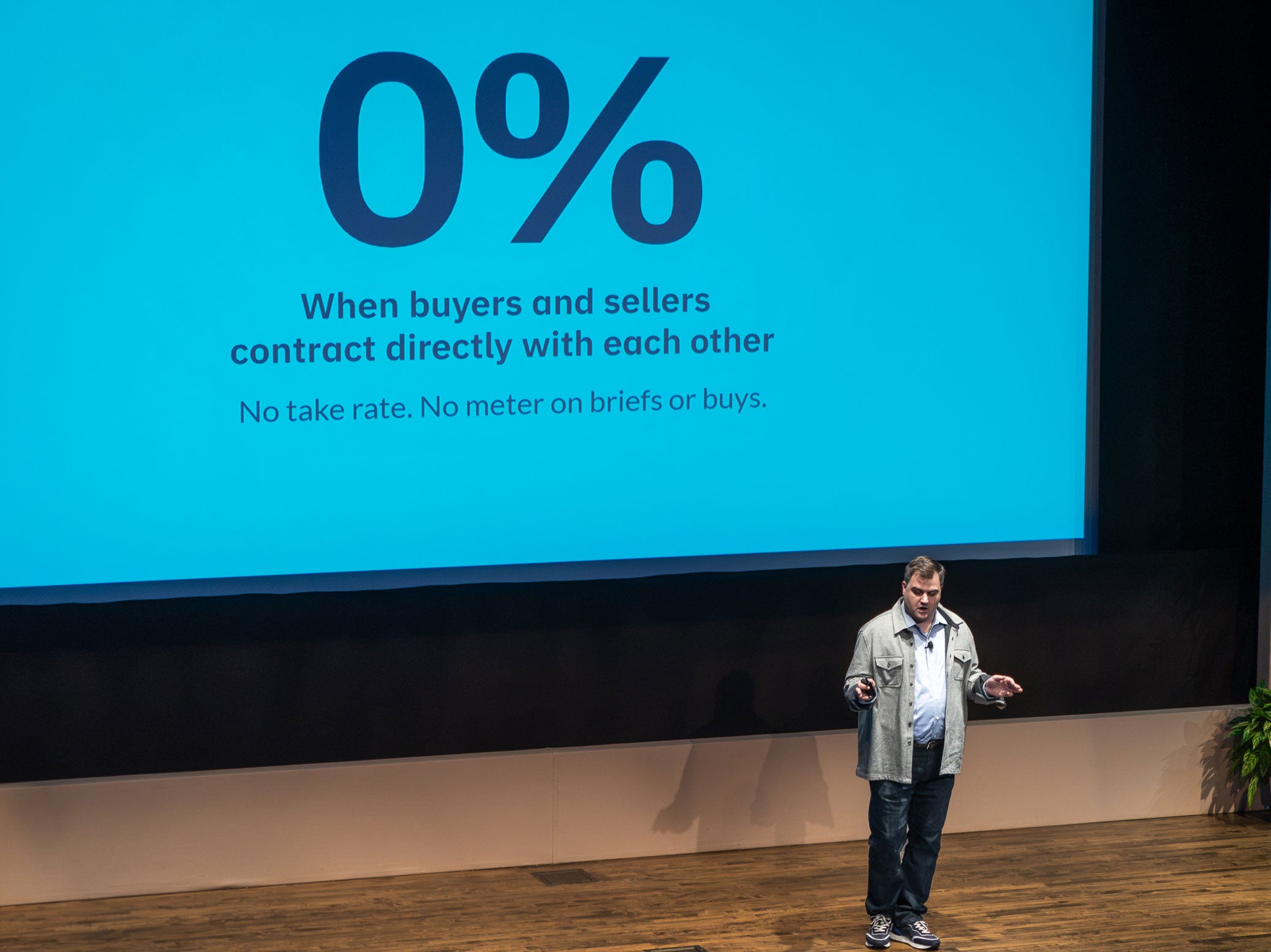
By scaling straight purchases, Optable purposes to direct even more dollars towards functioning media. To sustain this goal, the business won’t charge added deal or activation fees to Optable clients that contract and billing each various other directly. The Agentic Industry provides a separate paid option for purchasers that desire sophisticated targeting and dimension in addition to centralized purchase clearing up throughout publishers. However, critically, that price is paid as a solution as opposed to a per-transaction cost– and, in any case, authors pay nothing to sell via the market.
Optable leaders framed this as a shift in motivations: Advertisement tech must be compensated for its technology rather than instantly gathering a portion of advertising spend. “Software program should be paid for as software,” claimed Optable Co-Founder and Chief Executive Officer Vlad Stesin during his opening up remarks at Optable Connect.
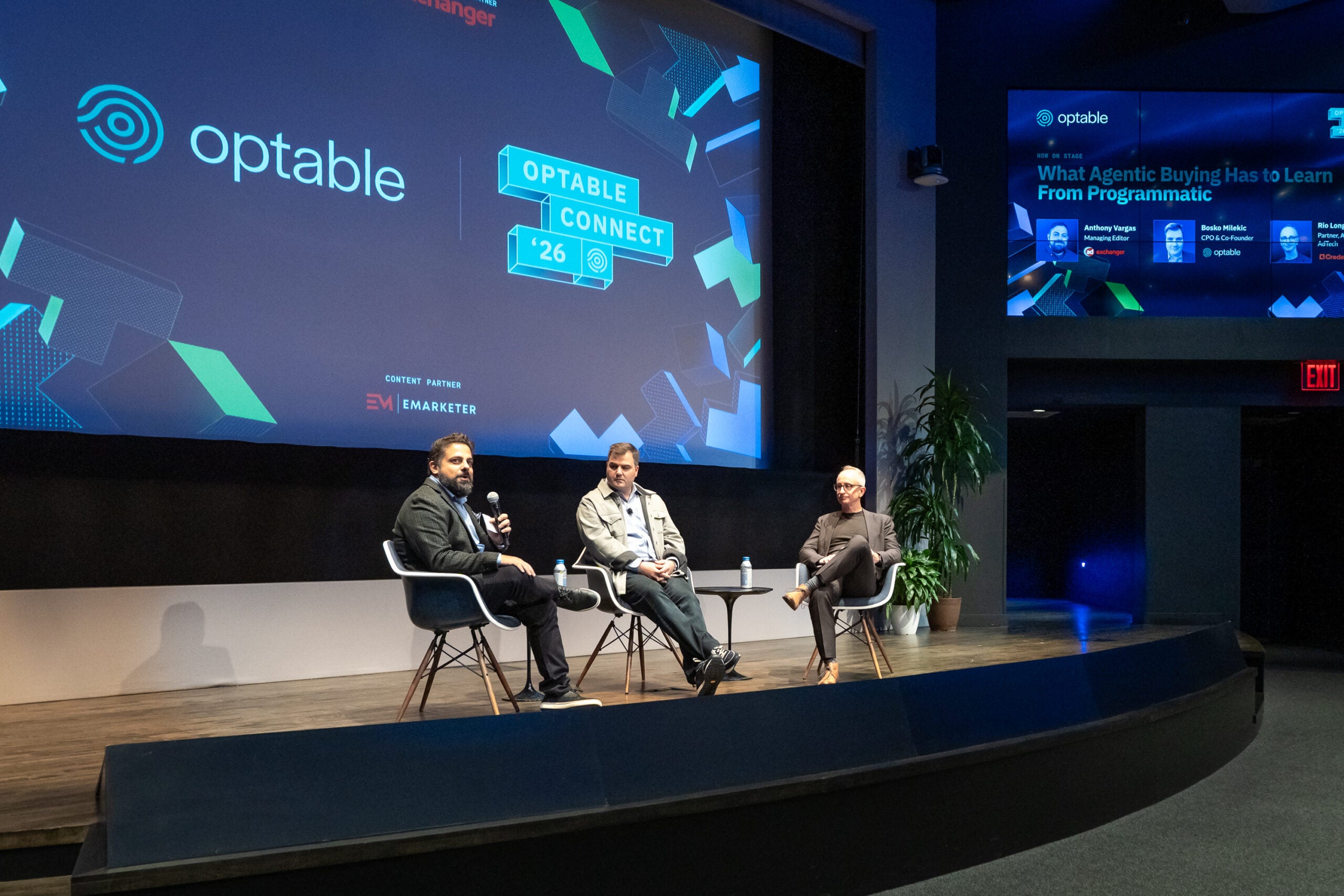
Stesin and other Optable leaders made it clear that disintermediation is not the goal, noting that DSPs, SSPs and other providers provide valuable solutions, including measurement, verification, targeting and optimization. But direct agent-to-agent purchases might let customers determine which solutions they require and which charges are warranted.
Additionally, Optable’s Milekic advised that agentic advertising could still advance down a various course: If every intermediary introduces its own agent– and proceeds gathering a percent of media invest– agentic marketing could recreate today’s intricacy and ineffectiveness at equipment rate.
Showing business situation
In the meantime, agentic marketing remains a small market. Emarketer projections shared at Attach put agentic media buying at $ 100 million in 2026, potentially expanding to $ 3 9 billion in 2027 and $ 29 5 billion in 2028
“There’s a great deal of target market exploration occurring, yet not as much deal,” said Dave Lundell, vice president of item advancement at Hearst, during a publisher panel.
That void highlights a familiar tech fostering mystery: Both sides require a company situation before devoting substantial resources, however each depends on the various other’s participation to verify the design works.
Purchasers and firms require proof that agentic buying provides far better campaign results– an advantage they can use to win and maintain advertisers. Publishers require confidence that incremental income will justify investments in arranging audience information and adapting their framework to sustain automated transactions.
Naturally, Milekic’s caution still impends: Whether the sector utilizes the abilities of agentic AI to streamline advertising deals– or just includes one more layer to the existing supply chain– continues to be to be seen.
For Optable, the brand-new industry stands for a bet that the industry is ready for more than faster deals. It’s a brand-new model of media getting that protects programmatic range and data-driven acquiring while addressing the friction, complexity and unnecessary costs of the status.
For even more articles featuring AdExchanger Web content Workshop, visit this site
Recommended AI Marketing Tools
Disclosure: We might earn a payment from affiliate links.
Initial insurance coverage: www.adexchanger.com
Leave a Reply