
Pleased New Year!
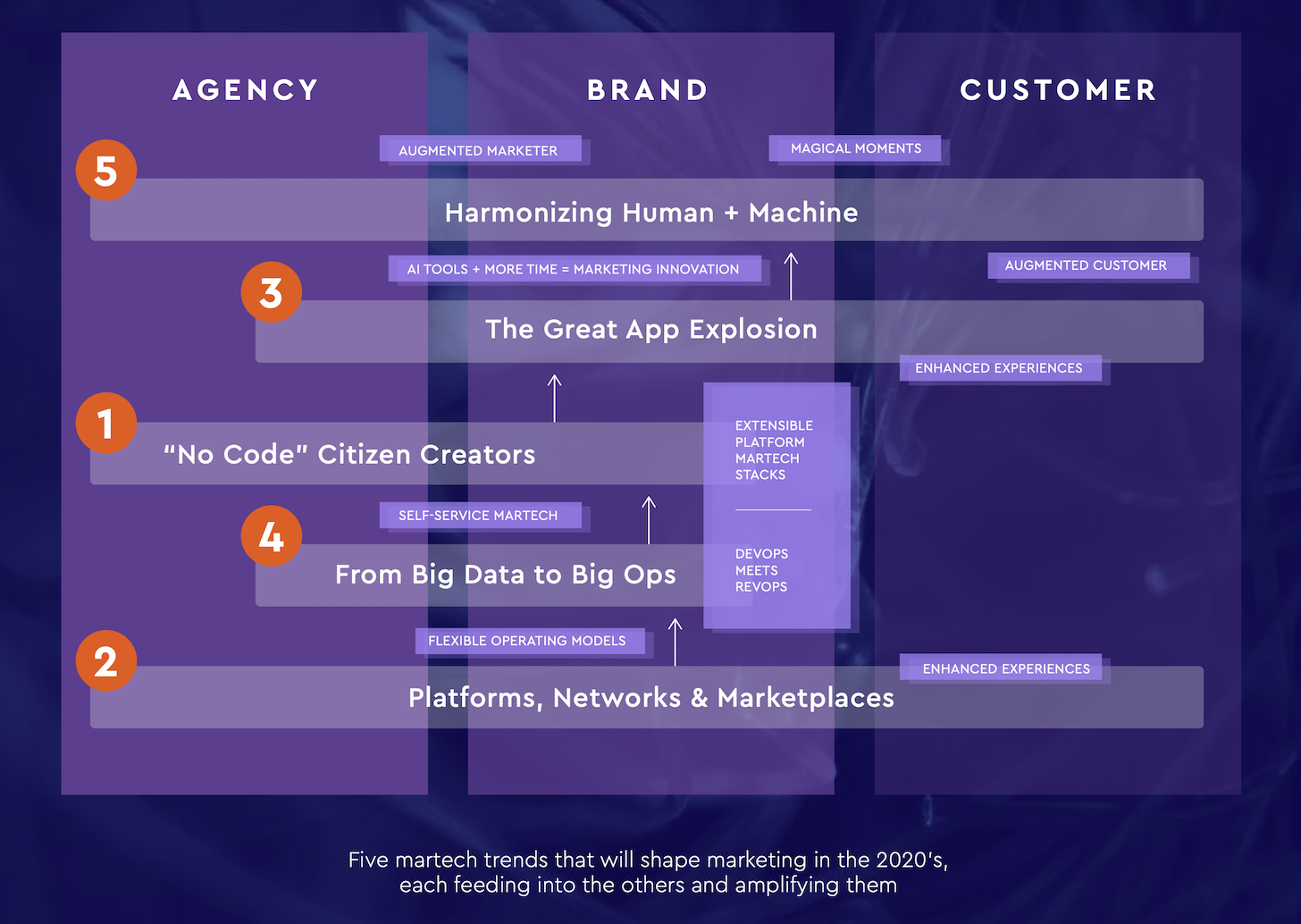
Five years ago, Jason Baldwin and I released Martech 2030 (ungated PDF), a report predicting 5 major patterns that would certainly form advertising and marketing and martech through what we christened The Decade of the Increased Online marketer
We’re currently at halftime at the start of 2026
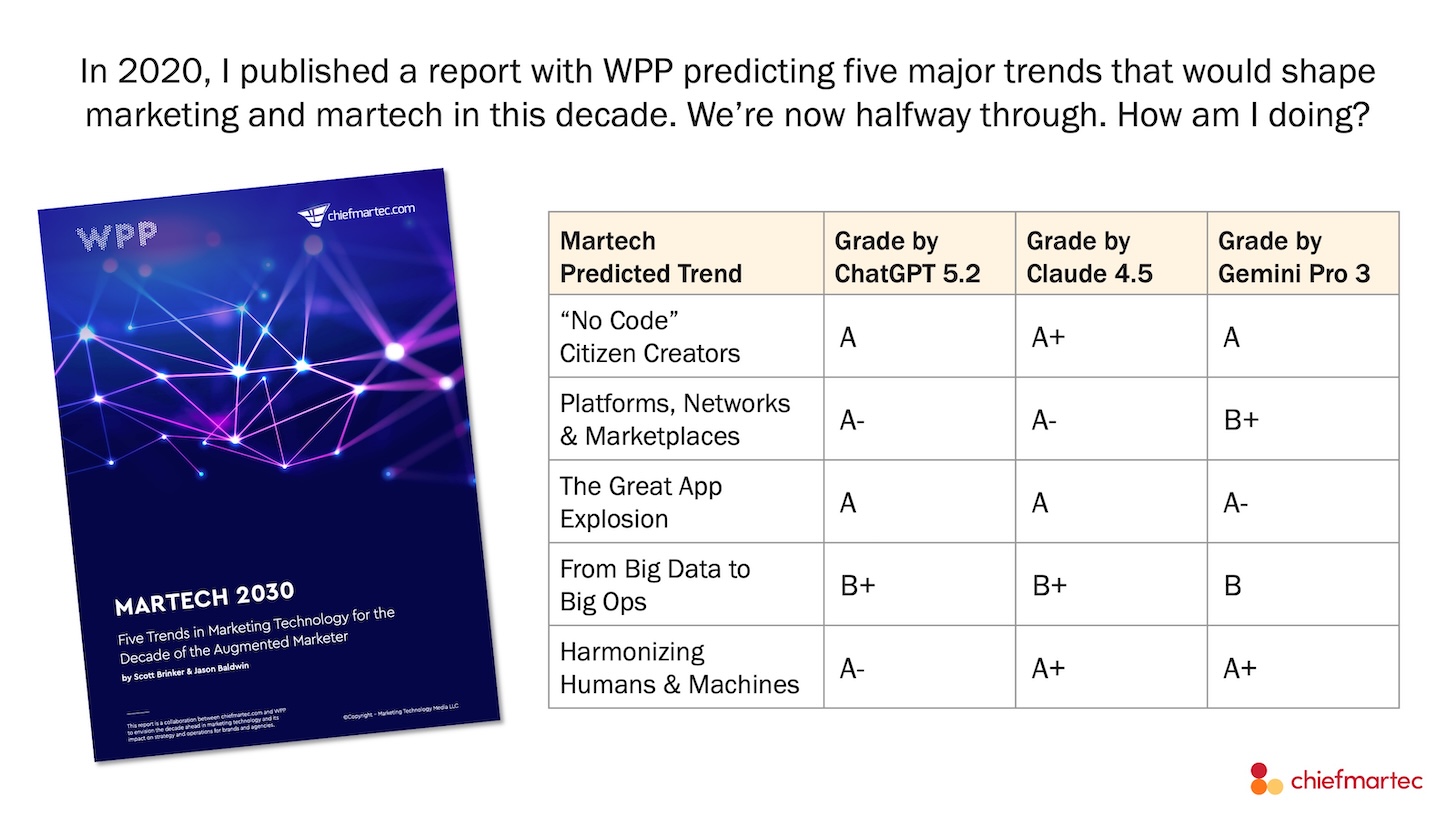
Exactly how are those forecasts standing up? I asked ChatGPT, Claude, and Gemini to quality them. Their evaluations were quite positive– specifically for our vision of “harmonizing humans & makers.” (It deserves a chuckle that Claude and Gemini gave us A+’s on that one. Very unified.)
But you should be the actual judge. Exactly how do these associate your lived fact?
Pattern # 1: “No Code” Resident Creators
Even in the previous decade, I was currently bullish regarding “no code” systems encouraging online marketers to self-service execution of their digital ideas. Airtable, Webflow, Zapier were my best examples for databases, internet sites, and operations automations respectively. Gartner called these customers person developers. I have actually called them “advertising makers,” builders in the go-to-market realm. And I expected that we ‘d see a great deal even more of them– with a whole lot even more power at their fingertips.
In all modesty, we nailed this one. Yet largely because of a development that we didn’t see coming: the generative AI surge that began in late 2022
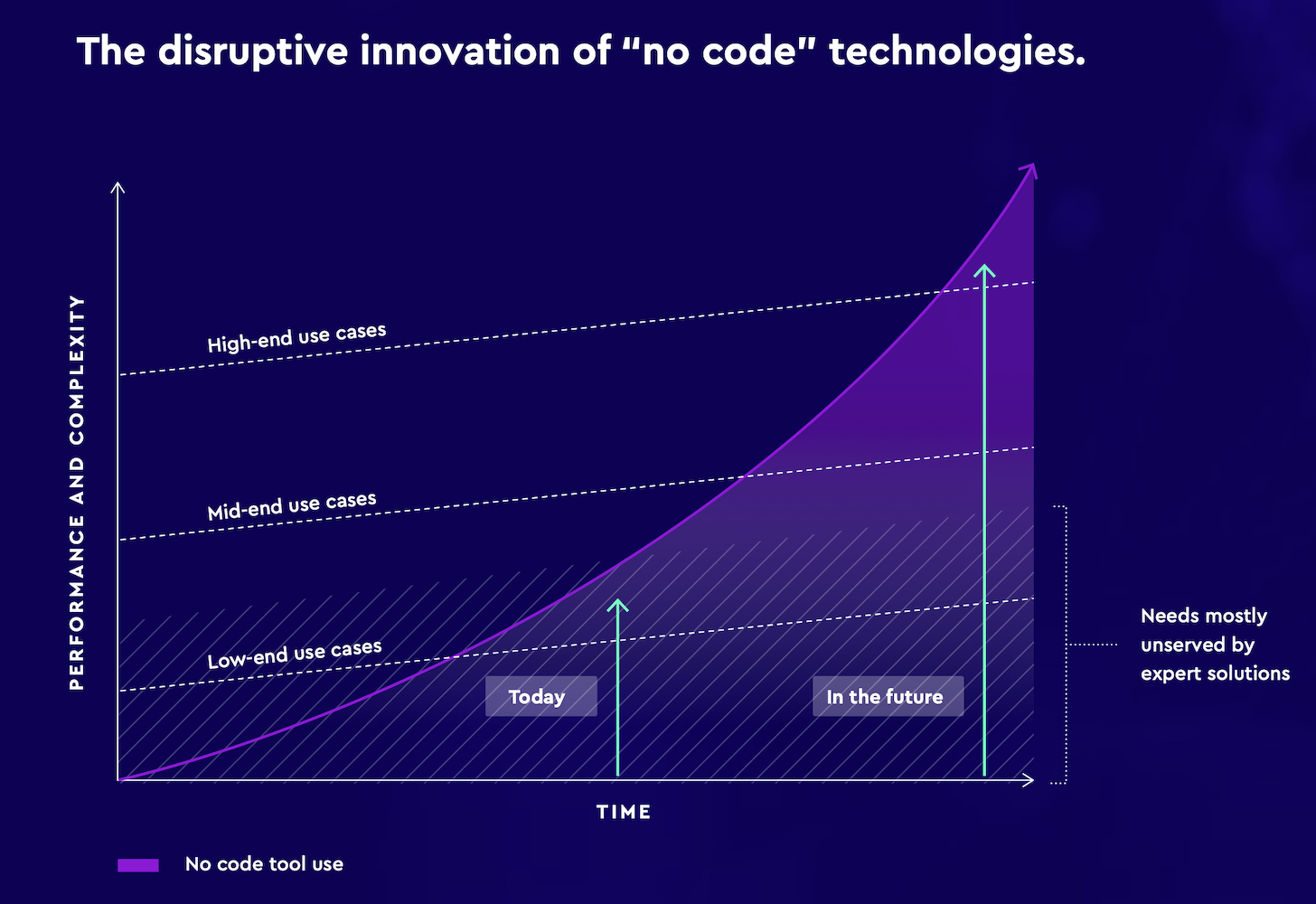
No code made use of to be primarily drag-and-drop. With LLMs, all of a sudden you could merely explain what you wanted, and the AI would create it. Initially, it was primarily for creating text and six-fingered pictures ( paging Inigo Montoya However over the previous two years, you can speak your method right into structure apps, representatives, video clips, infographics, process, campaigns, information analyses, PowerPoint decks, etc. It’s still a jagged frontier, however the result for a number of these is obtaining quite good.
As Andrej Karpathy stated, “The best brand-new programming language is English.”
The ambiance coding sensation of 2025– a term coined by Karpathy– pushed this into hyperdrive. Bolt, Lovable, Replit, and Vercel made it remarkably very easy for non-engineers to produce applications and agents. Provided, this worked best for reasonably standard use cases. Yet those were specifically the type of underserved chances that Clay Christensen had actually observed as the structure of turbulent technology. See my post on the Lemkin Range of Ambiance Coding for a much deeper dive on this.
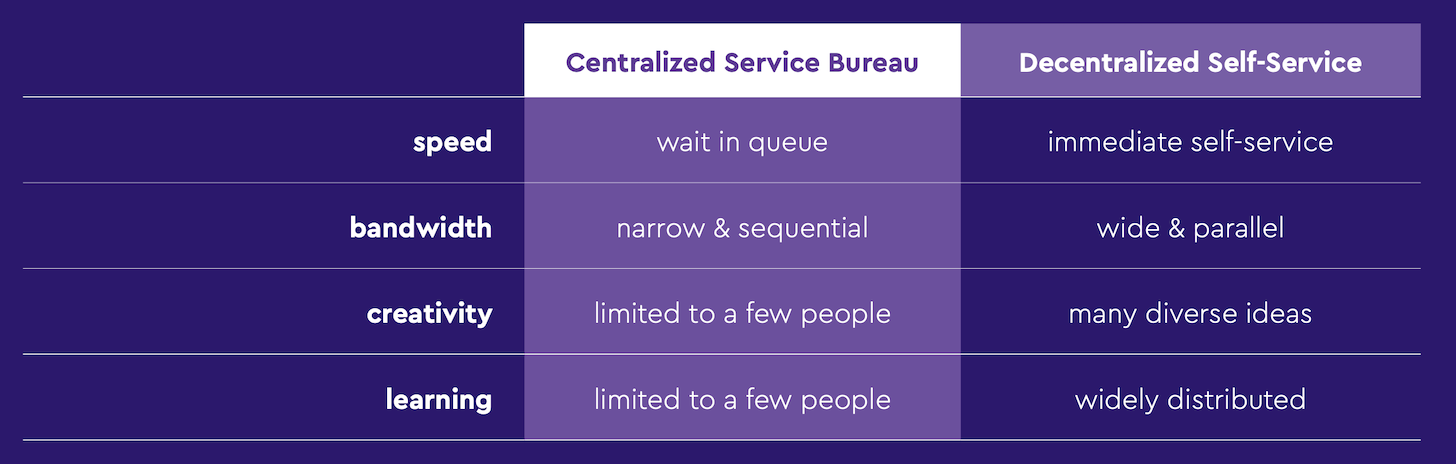
In lots of methods, the major AI assistants such as ChatGPT, Claude, and Gemini are über no code platforms, allowing you produce an ever-wider range of electronic properties on demand. Groups that leaned into these capacities have actually profited of higher speed, data transfer, imagination, and discovering of decentralized self-service.
That stated, governance and guardrails for citizen-created assets remain premature. Lots of organizations are still determining how to balance empowerment with brand name uniformity and conformity. We’ll come back to this subject with Fad # 4 concerning Big Ops …
Fad # 2: Platforms, Networks & Marketplaces
If previous years were about firms optimizing direct chains– worth chains, supply chains, circulation chains– we believed the framework and approach of services would certainly evolve to increasingly be driven by interconnected graphs and ecosystems through systems, networks, and markets.
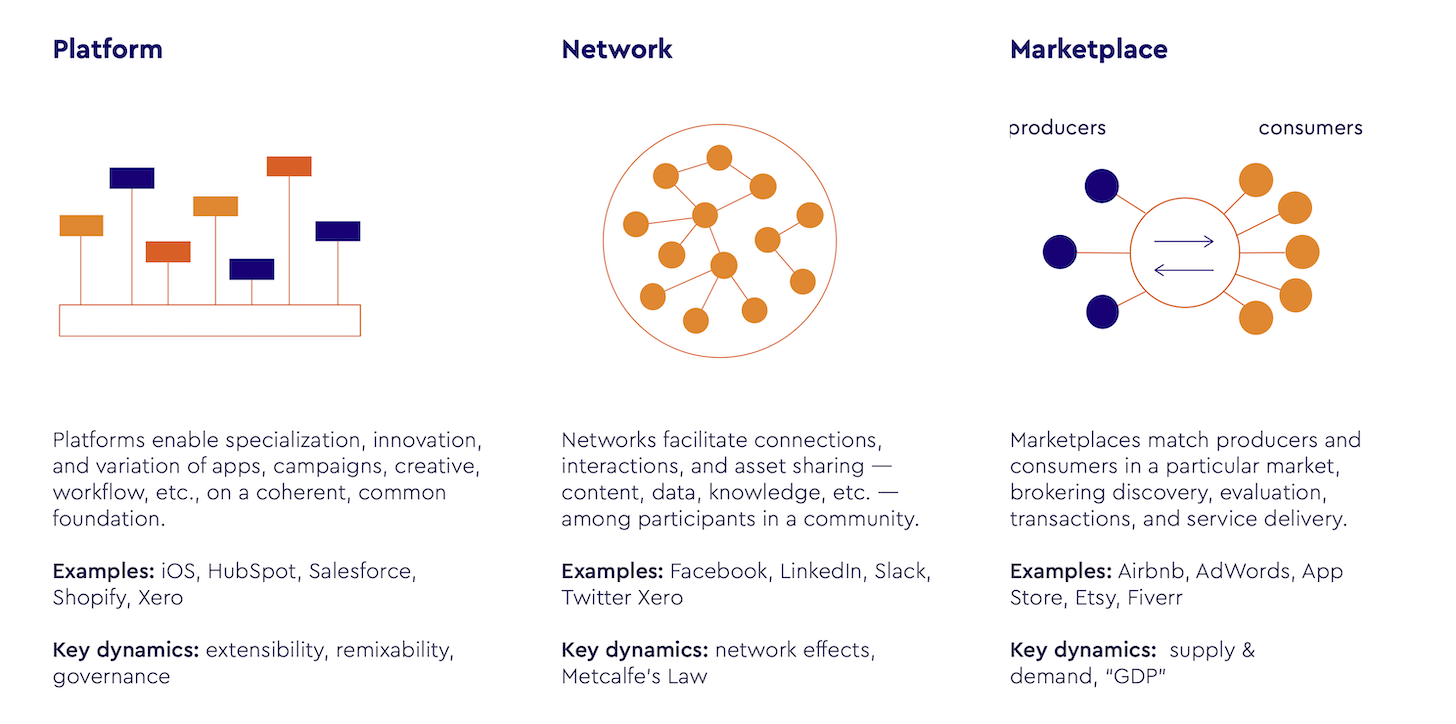
In martech, platform ecological communities have now totally replaced the old collection vs. best-of-breed dichotomy. (I was thrilled to add to this change as VP system community of HubSpot, a role I left this previous September after 8 years of constructing the firm’s ISV program from the ground up.)
Two of the most popular systems today are Databricks and Snowflake, which serve as unviersal data layers that integrate across heterogeneous technology heaps. Possibly the most interesting platforms headed into 2026 however are the major AI engines, with MCP adapters and the arising principle of ChatGPT Apps.
Networks were currently ubiquitous, but have actually expanded even more so. Digital industries have actually multiplied. I would state one of the most significant ones in martech are the hyperscalers: AWS Industry, Google Cloud Market, and Microsoft Industry now transact an estimated $ 45 billion in yearly business software sales. Adobe, HubSpot, and Salesforce currently all offer products with this channel.
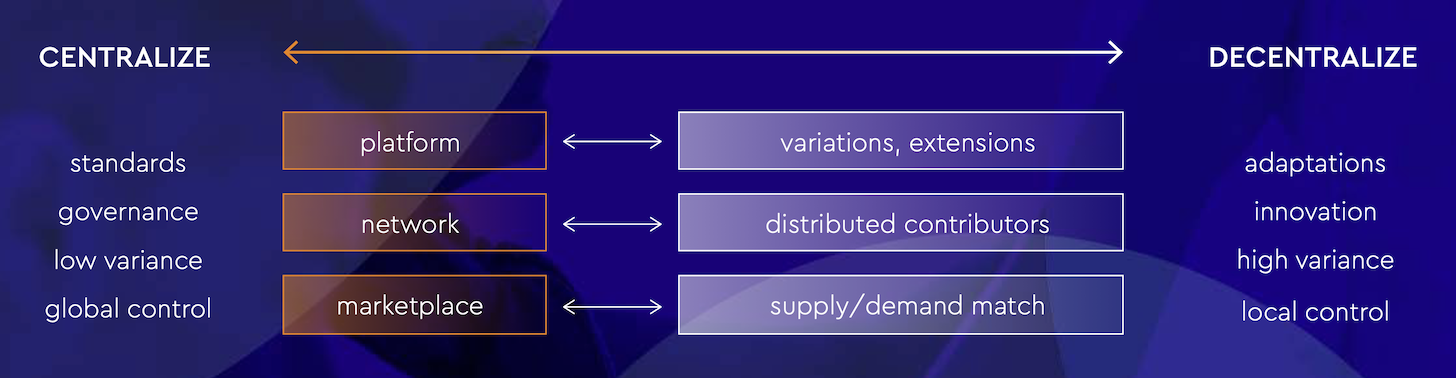
One relatively paradoxical harmonizing act of systems, networks, and marketplaces: it is with the systematized control of criteria and administration, when paired with technical and thoughtful openness, that these community mechnisms drive decentralized development and innovation. You systematize to decentralize. It’s a little bit of a Zen koan for the digital age.
That’s partly why this is just an A-/ B+ so far. Community characteristics are still new for numerous firms, who choose the greater control they have– or at least the illusion of control– with more direct, straight go-to-market techniques. But those are old mental versions from a previous era. I’ll double down on my bet that ecological communities and the platforms, networks, and industries that stimulate them will certainly underpin marketing by the end of this years.
Pattern # 3: The Terrific App Surge
When we created the Martech 2030 report, the 2020 martech landscape had 8, 000 services. As part of a yearly tradition, many people presumed that was “peak martech.” But right here we are in 2025 with virtually twice as numerous: 15, 384 commercial solutions on the map
Why hasn’t this combined? Actually, it continuously settles via competitors and M&A. Yet due to the fact that there are successfully no barriers to entry in software– a trend that AI has called approximately 11– brand-new products remain to gather at a much faster price than they drain pipes out.
Ironically, it is the consolidation of hyperscaler cloud facilities and major application platforms that stimulated the blossoming of thousands of specialist apps improved those structures. (Centralize to decentralize.) These applications comprise the lengthy tail (the loooooooong, lengthy tail) of the martech landscape: upright market apps, local applications, ecosystem applications, service provider applications, and an incessant tide of start-ups aspiring to interfere with the incumbents.
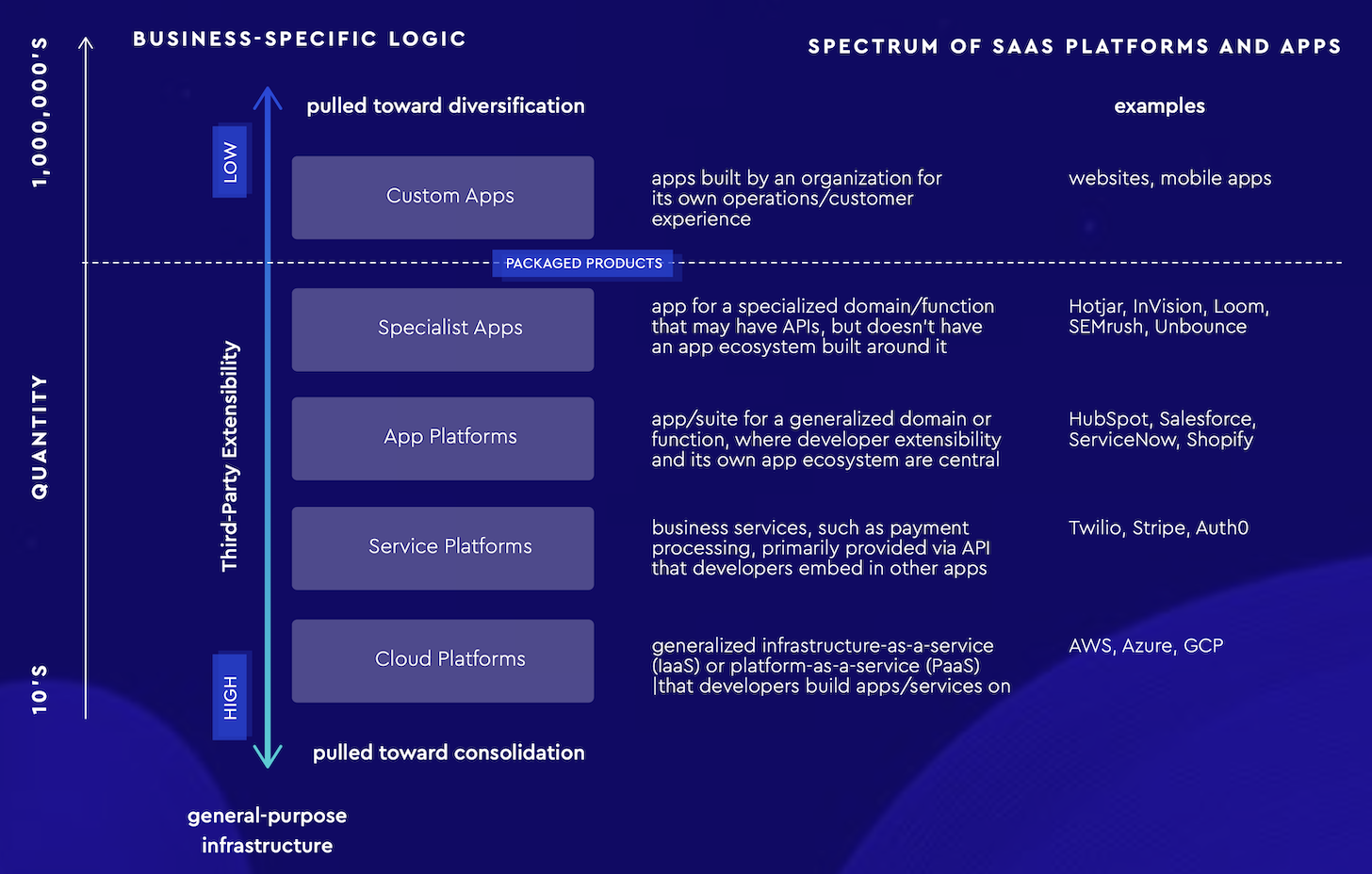
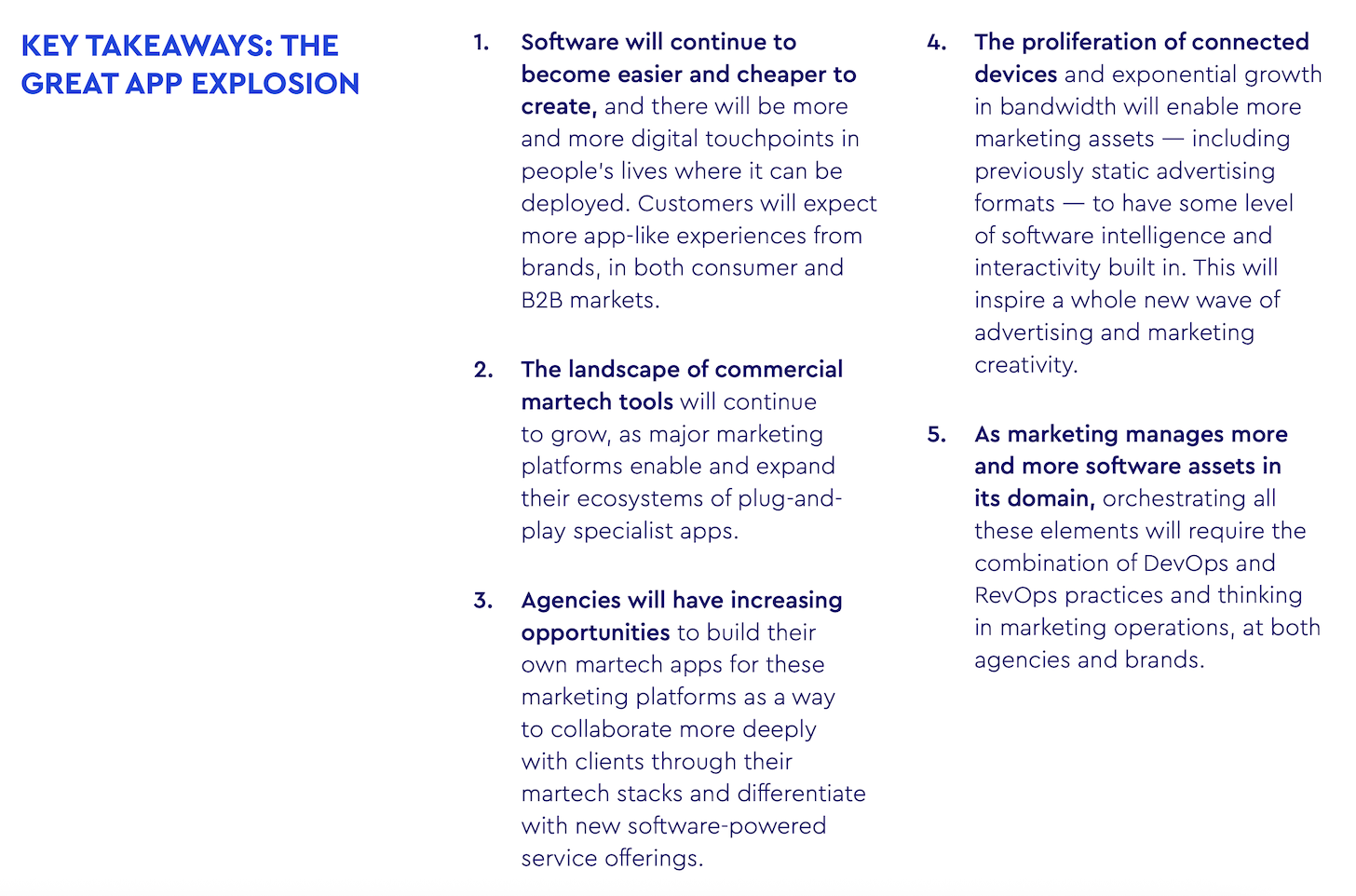
But we predicted that The Excellent Application Explosion would be even larger. Not hundreds of apps. Billions of apps. The large bulk custom-made developed by companies, customized to their very own procedures and client experiences. While we anticipate the long tail of industrial martech will certainly remain to grow, it will certainly be towered over by the hypertail of personalized martech. (For even more concerning the hypertail, download our State of Martech 2025 and Martech for 2026 records from last spring and this previous December.)
AI has actually provided The Fantastic App Surge, and the hypertail is currently flourishing today. 5 predictions we made within this fad are additionally appearing, including service-as-software (takeaway # 3 and the increase of intelligent/interactive advertising possessions (takeaway # 4:
Trend # 4: From Big Data to Big Ops
We expected that the 2020’s would certainly be a years of Large Ops. Analogous to wrangling the range and complexity of Big Information, the mission of Huge Ops would be to deal with and tame the scale and intricacy of hundreds to thousands of parallel apps, representatives, and automations operating on that sea of information within a company’s procedures.
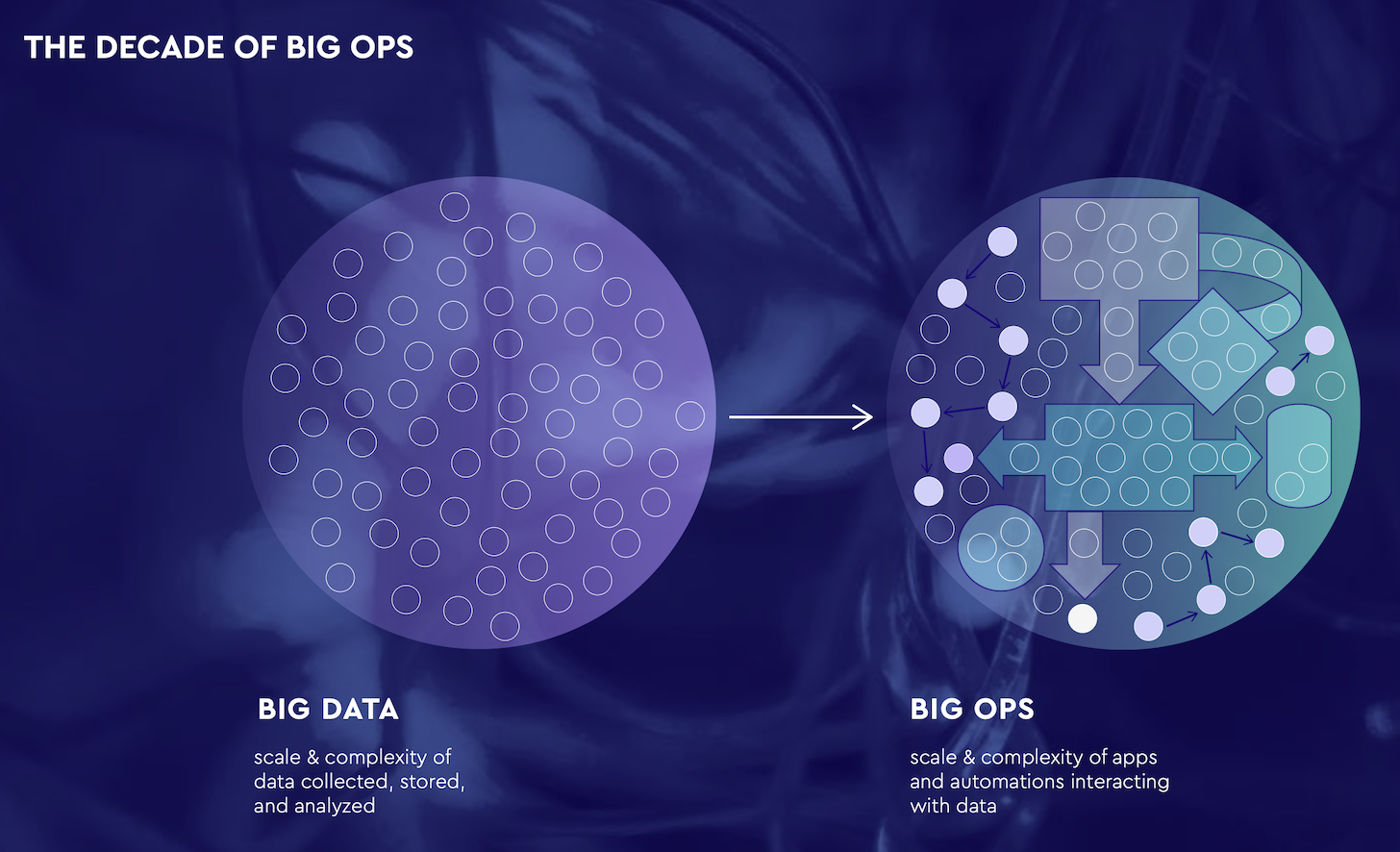
We properly called the issue– the chaos of uncoordinated “No Code” Resident Creators and The Great App Surge– making ourselves a solid B/B+. Solutions, both technical and organizational, nonetheless, are still emerging. Practically every major platform in martech is concentrated on this problem/opportunity right now, mounted as “orchestration” and “decisioning.”
This is mosting likely to be the system fight for the rest of this decade. Grab your snacks.
Information is an important possession in Huge Ops. However its value is only opened through its purification and activation, which we referred to as data knowledge and data relfexes One of my favored allegories from our report: information is not the new oil, it is the new oil paint. Large Ops is how we go from pigments on a combination to masterpieces on a canvas.
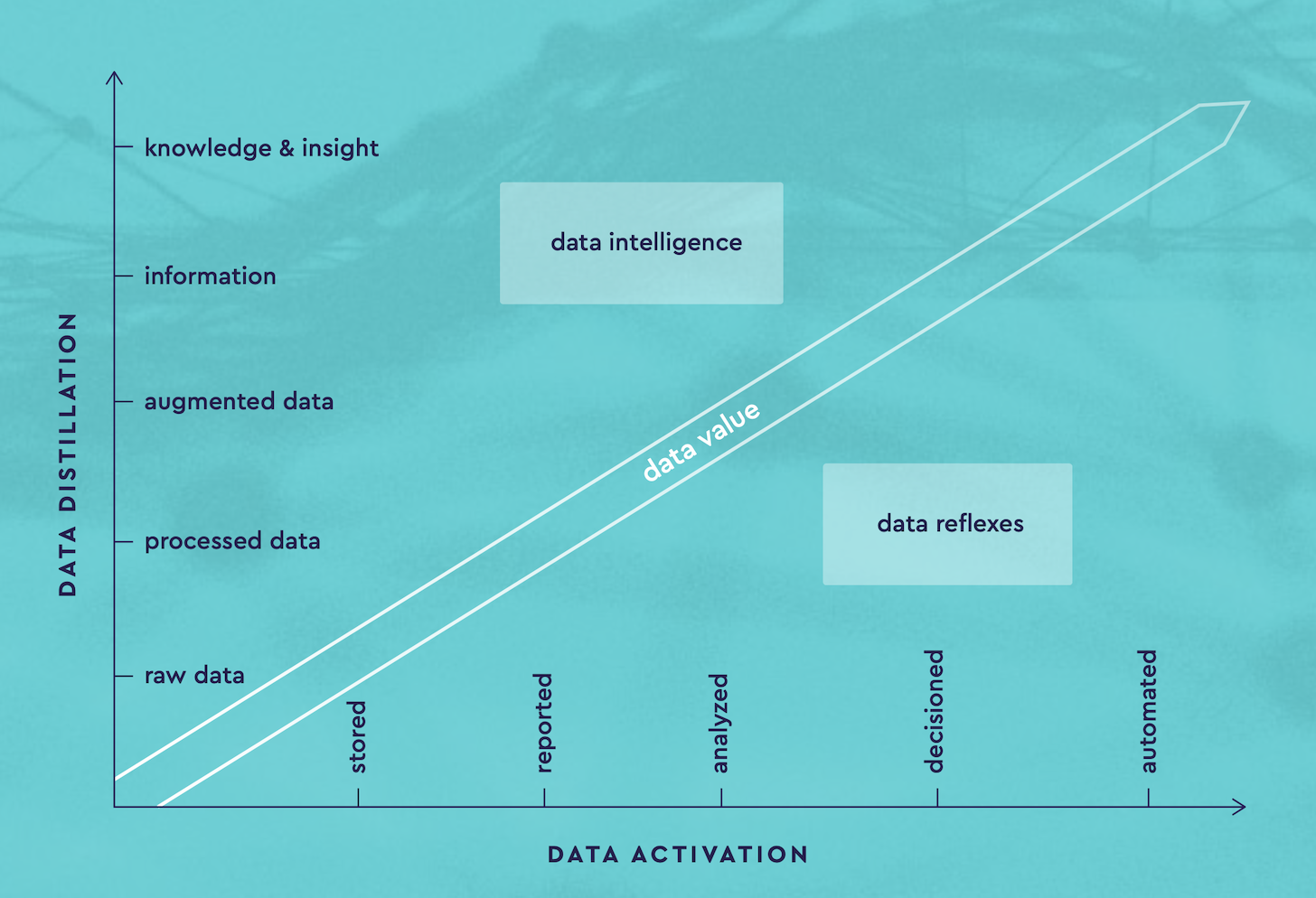
It’s the complication of Big Information and Big Ops that positions Databricks and Snow– as well as the hyperscalers AWS, Google, and Microsoft– as significant challengers in the Orchestration Wars.
It will be a craze of coopetition in between them and the public martechs (e.g., Adobe, Braze, HubSpot, Salesforce, Zeta), advancing CDPs (e.g., Hightouch, Tealium, Syncari, Treasure Data, Twilio), agent/automation platforms (e.g., CrewAI, n 8 n, Make, Workato, Zapier), a wave of next-gen martech start-ups (e.g., GrowthLoop, iCustomer), and even the AI giants Anthropic and OpenAI.
Going to require even more snacks.
Pattern # 5: Harmonizing Human Beings + Machines
“Greater automation and AI help will give online marketers even more time and new tools to concentrate on clients, creativity & technology.” If we made that forecast today, the reaction would be “no duh.” However 5 years back, this was prescient. The chart we mapped out below is practically exactly how this is playing out.
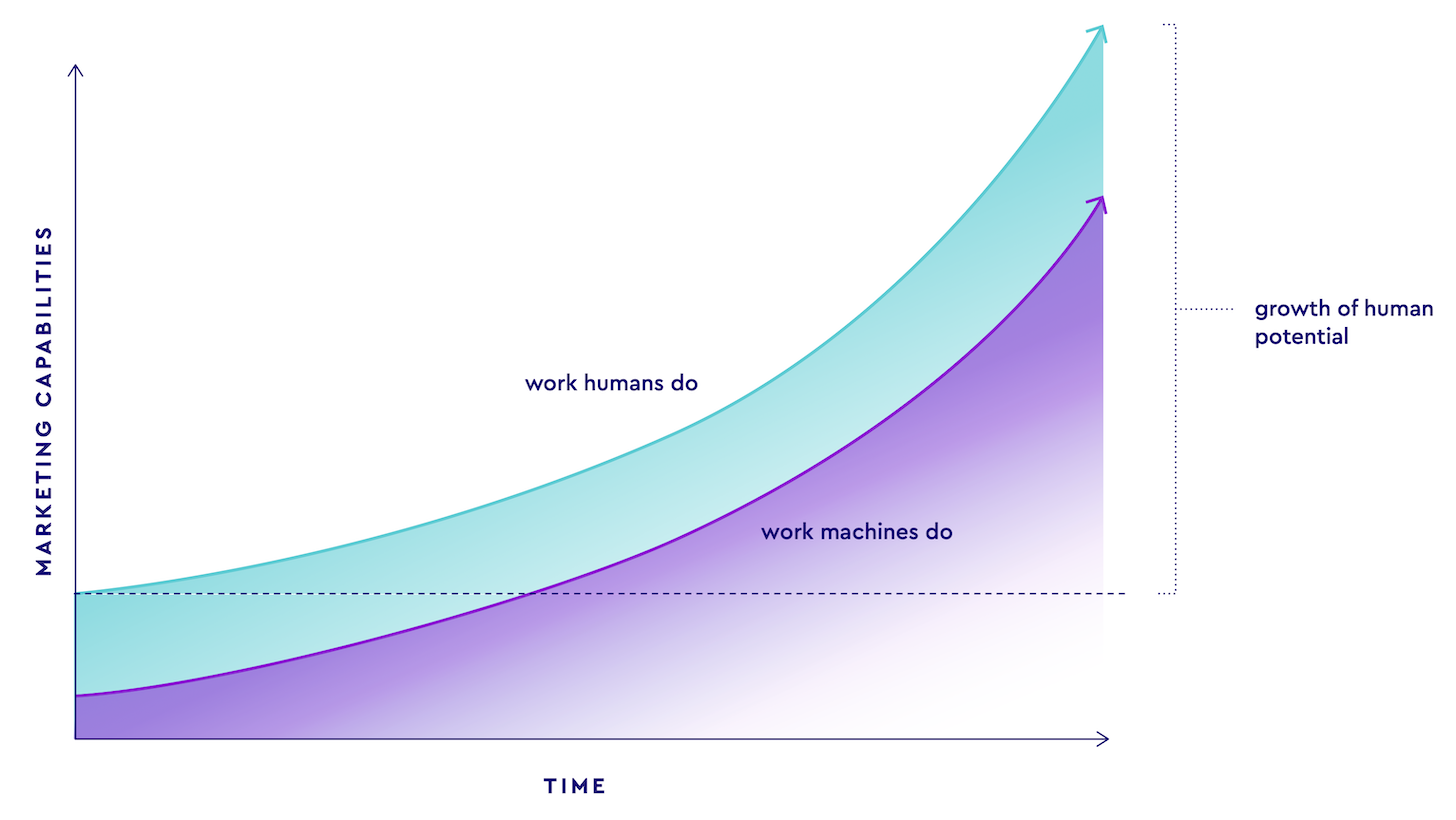
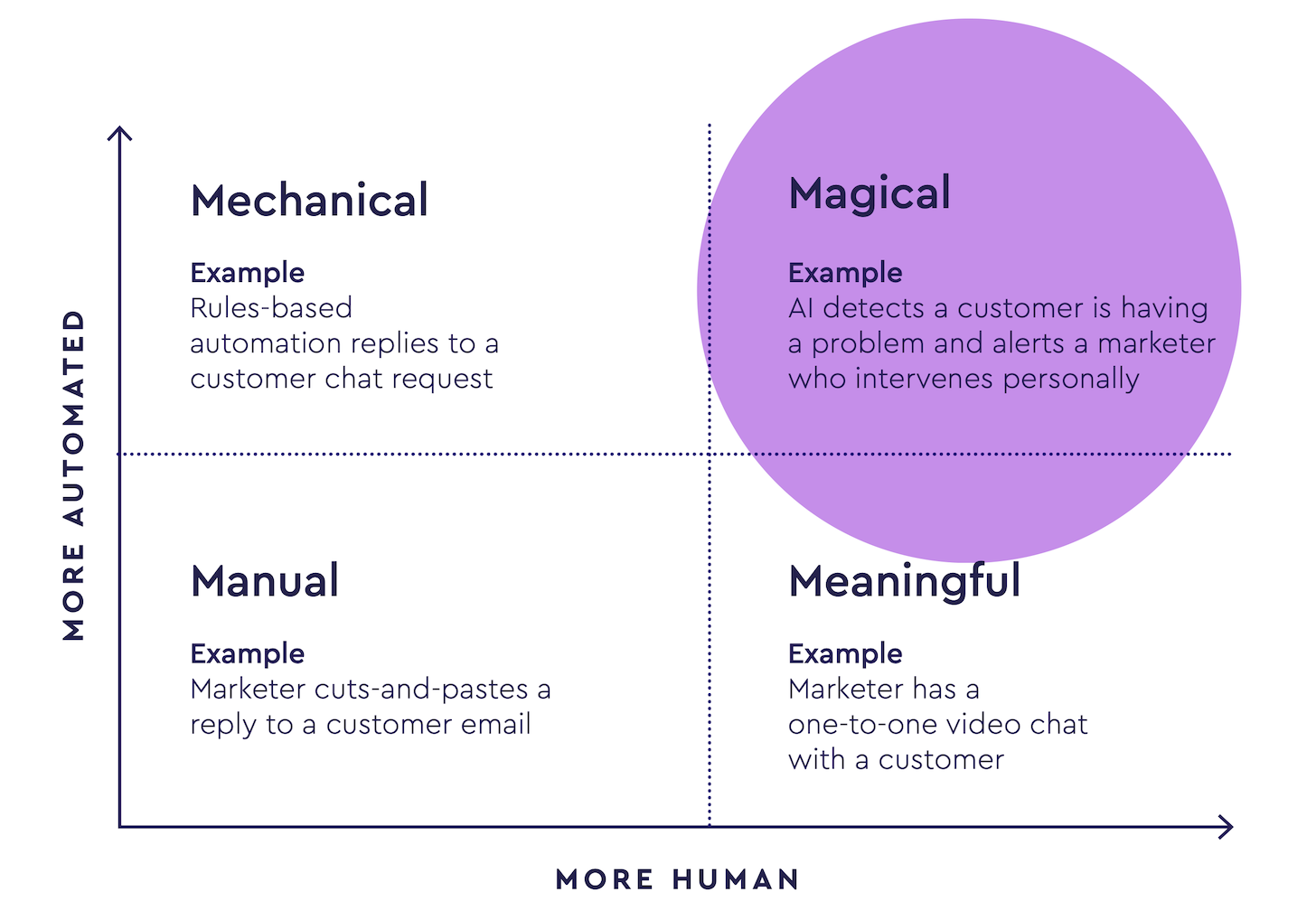
We noted that automation and human involvement aren’t necessarily mutually unique, and when appropriately synthesized with each other can supply wonderful experiences:
We likewise prepared for the surge of buyer-side AI, which emerged as a market force in 2025 with Representatives of Consumers What we visualized in 2020 as a shift from search engine optimization to BBO (Purchaser Robot Optimization) is the sensation we have actually come to know as search engine optimization to AEO (AI Engine Optimization). What we anticipated as Bot Commerce is currently called Agentic Business.
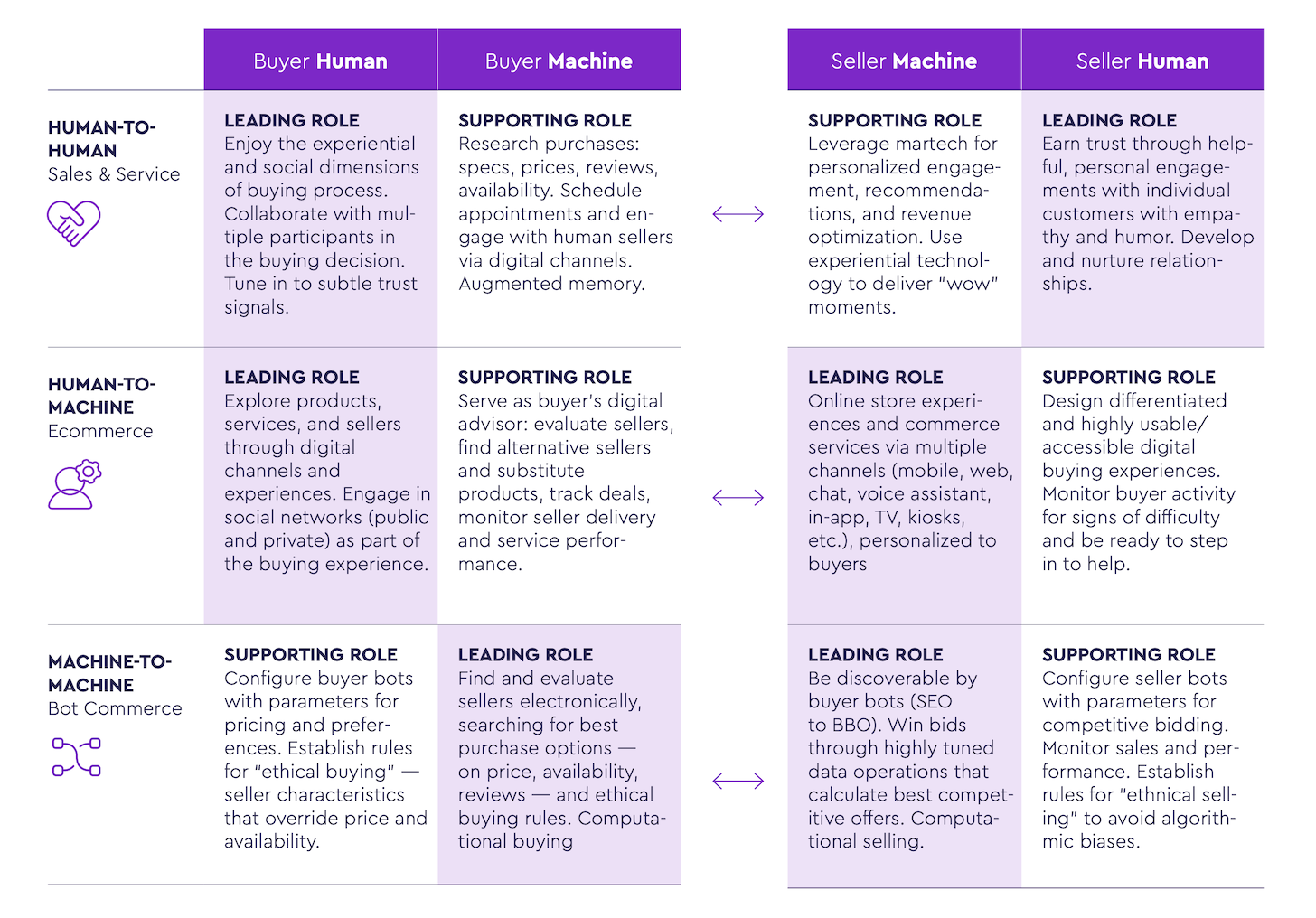
The tags we’ve arrived on are cosmetically different, however the AI ideas we specified 5 years earlier have actually crossed from theory into truth. I believe we gained our A+’s below, no?
Final thought
What do you assume? Did the ChatGPT, Claude, and Gemini grade us relatively?
Amara’s Regulation mentions that we often tend to overestimate the short-term effect of technologies yet ignore their long-lasting results. The objective we had with our Martech 2030 paper was to think about that lasting arc. While these 5 trends are still evolving, it’s impressive how much they have actually come in these previous few years. The speed is accelerating.
For better and even worse, I don’t believe it will decrease in 2026
Let’s revisit this paper again in 2030 for final grades.
Obtain chiefmartec in your inbox
Join 42, 000 + marketing experts and martech specialists that obtain my newest understandings and evaluation.
Suggested AI Advertising Devices
Disclosure: We may gain a payment from affiliate web links.
Original coverage: chiefmartec.com
Leave a Reply