
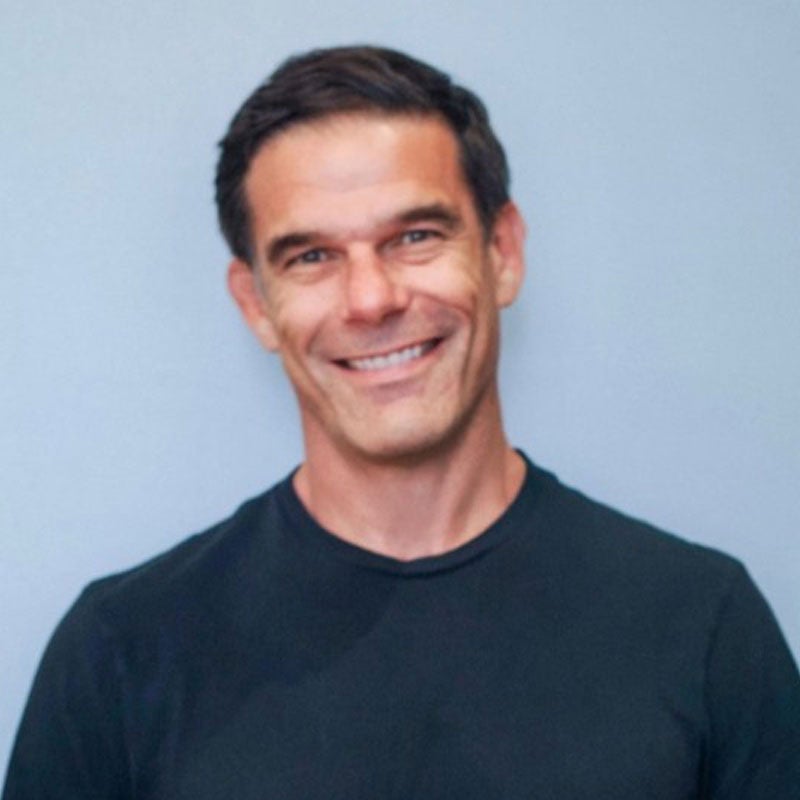
Despite its steady growth, digital audio still lugs the credibility of an underachiever.
In an effort to close the gap in between ad spend and time invested with podcasts and music, most of the big audio incumbents are accepting video and chasing after political advertisement budgets to balance guides.
However “video clip is an enhancement, not a replacement,” said Greg Glenday, chief executive officer of Swedish audio ad platform Acast.
“People are trying to turn podcasting right into vlogging, however that’s not what it is,” said Glenday, that took the president duty in June after two years as Acast’s chief business policeman, following a career in audio extending back to the mid-‘ 90 s.
For the very first time in Acast’s 10 -year history, Glenday said, the United States is Acast’s largest market.
“It resembles the dog who caught the auto,” he joked. Currently, Acast should devise a growth strategy for the US, which is hard in a market where most brands deal with electronic sound as a standalone network, he stated. Yet programmatic tech has actually opened new opportunities in omnichannel activation, self-serve buying and bargain curation.
Glenday talked with AdExchanger about why Acast is resisting the attraction of video, the compromises of approving political advertisement bucks and placing influencer marketing as audio’s entrance point into the omnichannel mix.
AdExchanger: Video podcasts are big business for YouTube and a development area for Spotify. What regarding Acast?
GREG GLENDAY: We desire our creators to be able to do video through our CMS. We have connections with Spotify and YouTube.
Yet the charm of podcasting is that there’s no arbiter in between the podcaster and the listener. There’s nobody making a decision that if I stated the incorrect point, they’re mosting likely to demonetize me. Video’s a various globe– there’s a formula– whereas podcasting is sought, not served.
Isn’t podcasting rotating to video since the CPMs for advertisements are greater than for sound? Why not go where the demand is?
For us, I do not believe that’s the appropriate area to be. Even when we market video, we’re marketing it to audio people, to influencer groups or to brand names straight. It’s a little bit naïve to assume podcasting is ever going to allow sufficient to participate in the innovative linked TV market, which is much more concerning one-to-one information.
What’s the technique to unlocking larger US ad budgets for electronic sound?
Take into consideration a $ 10 million project. By the time it reaches audio, the firm associate has perhaps $ 1 million to spend. He’s mosting likely to purchase radio, network, streaming– and then we obtain our $ 50 K.
As an example, take a theoretical customer brand name represented by, say, Publicis. Their audio representative only gets briefed twice a year by the brand, so he’ll do 2 campaigns. If we get $ 100 K per campaign, then we hit the gong and celebrate.
But we additionally have our omnichannel group that handles podcasts and collaborates with Publicis’ influencer group, which obtains informed 20 times a quarter. We can pitch a $ 2 million or $ 5 million concept with baked-in well-known content and long-tail [audience extension]
What are your ad technology top priorities?
Our self-serve system has a couple thousand advertisers and it’s growing monthly. If our vendors can do $ 5 million deals, we do not always desire them tampering $ 15, 000 bargains. However those smaller sized deals are essential, so putting them with the self-serve website has actually been useful.
And everybody’s obtained an AI approach. We’re making use of AI to make smart referrals. If somebody’s mosting likely to invest $ 50, 000 on their bank card to promote a small business, they constantly desire aid with the technique and the innovative.
Is sell-side curation boosting your programmatic organization?
We still offer a lot of our stock straight, but programmatic and self-serve are growing much faster than direct-sold. Programmatic ensured has to do with fifty percent of our business.
In the US, podcasting constantly worked such as this: A brand would certainly claim, “We intend to purchase this specific show till they quit offering our item, and then we’ll give them a remainder.” Like how farmers rotate their crops. However these bundles– where, as opposed to getting a program, you’re getting an audience– are a total departure.
Which marketing verticals are you seeing solid adoption from?
Charm, health and wellness, telcos and finance.
The one that’s been difficult to crack is political, due to the fact that a great deal of our developers want the money, however they resemble, “It’s not worth the Reddit issues.”
Mentioning, a creator in your network just recently published about an audience claiming they would certainly never pay attention to her podcast once more after listening to an ICE employment ad during the show. The creator claimed she attempted to obstruct political advertisements making use of Acast’s opt-out kind, however she obtained some confusing responses about requiring to obstruct a particular IAB classification. Have you thought of simplifying the opt-out process or relocating away from opting podcasts right into political advertisements by default?
I’m familiar with this one. This is not a justification, because we require to solve this problem, but it had absolutely nothing to do with our opt-out. That podcast pulled out.
This is the customers. They mislabel. Especially for something like ICE, they’ll hire an unreliable agency and pick the incorrect IAB category. That’s part of why in some cases the juice isn’t worth the press.
What’s the solution for category mislabeling?
We were worried about losing control with self-serve. Is it worth shedding a little bit of control simply for the scaled revenue? I assume it is. But we have actually got to put design initiative right into squashing this things.
We have actually AI via our subsidiary Podchaser that can do instant transcription and suffice off [if an inappropriate ad is running] We have actually been doing that with material, but now we’re aiming it at advertisements. We’re working on implementing it prior to midterm political elections.
Do political advertisers get to select what web content they work on?
They get to choose like anyone else. We also accumulated collections of programs that are done in on political ads.
What percent of your developers pull out of political ads?
Of the large shows, it’s a respectable portion; a quarter to a third at least.
A assistance write-up on Acast’s website claims publishers can not specify which political parties are able to run ads in their programs. Why have that policy, given the polarization around political content?
We may eliminate that. Possibly we could press a bit much more income out if we give them that alternative.
This interview has been modified and condensed.
For even more short articles including Greg Glenday, go here
Advised AI Marketing Equipment
Disclosure: We may gain a commission from associate links.
Original coverage: www.adexchanger.com
Leave a Reply