
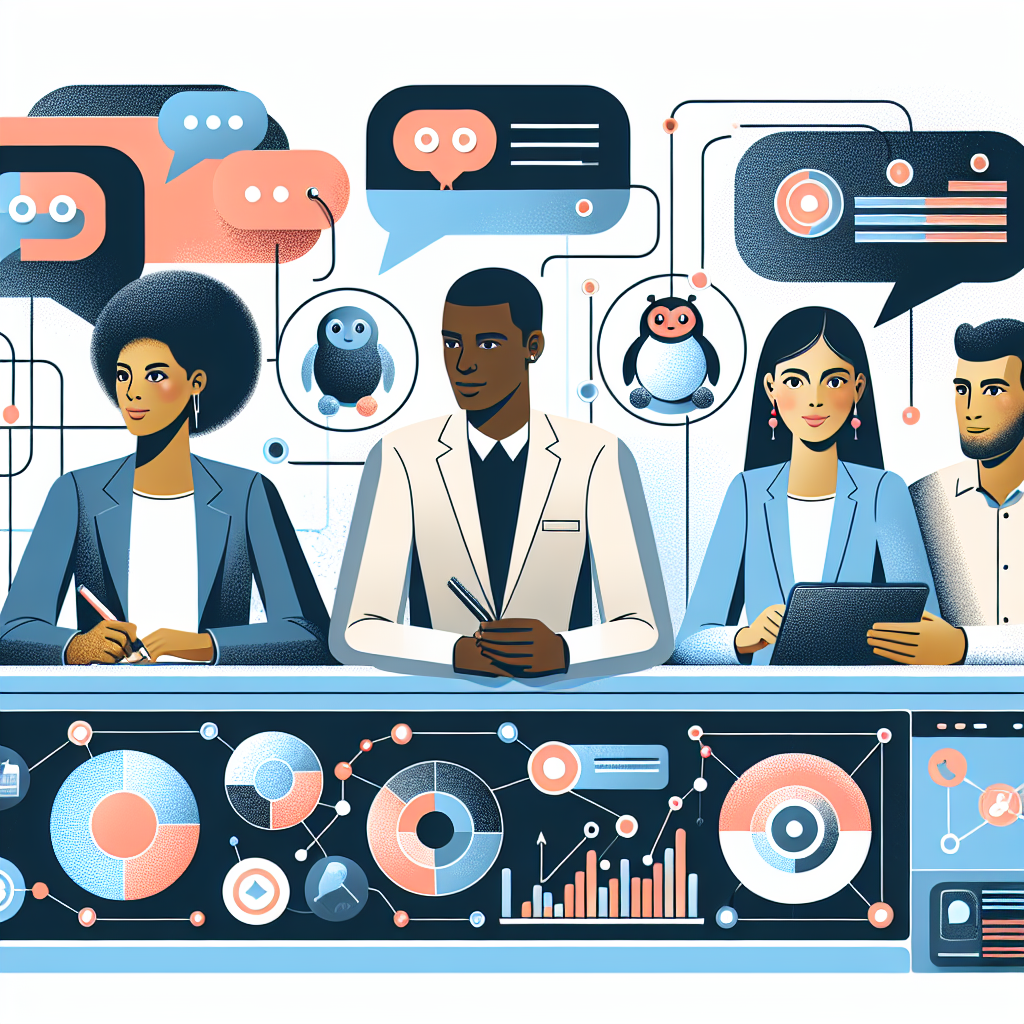
Microsoft today held a online statement event online for its Copilot AI electronic aide, with Mustafa Suleyman , chief executive officer of Microsoft’s AI division, and other speakers introducing a new generation of features that strengthen assimilation throughout Windows, Side, and Microsoft 365, positioning the platform as a practical assistant for people throughout work and off-time, while enabling them to maintain control and security of their data.
The new Copilot 2025 Loss Update includes additionally up the ante in terms of abilities and the access of generative AI aid from Microsoft to customers, so companies depending on Microsoft products, and those that look for to provide free of charge or completing items, would certainly succeed to examine them.
Suleyman stressed that the updates reflect a shift from hype to usefulness. “Technology needs to work in service of people, not the other way around,” he said. “Copilot is not simply an item– it’s a promise that AI can be practical, encouraging, and deeply personal.”
Intriguingly, the announcement also sought to shine a better limelight on Microsoft’s very own homemade AI designs, rather than those of its partner and investment OpenAI, which formerly powered the whole Copilot experience. Rather, Suleyman wrote today in a blog post:
“At the foundation of everything is our strategy to put the best models to work for you– both those we construct and those we don’t. Over the previous few months, we have launched in-house models like MAI-Voice- 1, MAI- 1 -Sneak peek and MAI-Vision- 1, and are quickly iterating.”
12 Attributes That Redefine Copilot
The Loss Launch combines Copilot’s identification around twelve vital capabilities– each with prospective to improve business knowledge job, advancement, or support procedures.
-
Groups — Shared Copilot sessions where as much as 32 individuals can conceptualize, co-author, or plan at the same time. For dispersed groups, it effectively merges a meeting chat, task board, and generative workspace. Copilot keeps context, summarizes decisions, and tracks open actions.
-
Imagine — A joint center for producing and remixing AI-generated content. In an enterprise setup, Picture makes it possible for fast prototyping of visuals, advertising drafts, or training materials.
-
Mico — A brand-new character identity for Copilot that presents expressive feedback and emotional expression in the kind of a charming, amorphous ball. Resembling Microsoft’s historic character interfaces like Clippy (Office 97 or Cortana (2014, Mico acts as a unifying UX layer across modalities.
-
Genuine Talk — A conversational mode that adjusts to a user’s communication design and offers adjusted pushback– ending the sycophancy that some users have actually complained concerning with other AI models such as prior versions of OpenAI’s ChatGPT For experts, it allows Socratic analytical instead of easy response generation, making Copilot more credible in technical partnership.
-
Memory & Personalization — Long-lasting contextual memory that allows Copilot recall crucial information– training plans, days, goals– at the customer’s instructions.
-
Connectors — Integration with OneDrive, Expectation, Gmail, Google Drive, and Google Schedule for natural-language search throughout accounts.
-
Positive Activities (Preview) — Context-based prompts and next-step recommendations stemmed from current task.
-
Copilot for Wellness — Health and wellness info grounded in trustworthy clinical sources such as Harvard Health and wellness, with tools permitting customers to locate and contrast physicians.
-
Find out Live — A Socratic, voice-driven tutoring experience making use of questions, visuals, and white boards.
-
Copilot Mode in Edge — Transforms Microsoft Side into an “AI browser” that sums up, compares, and performs web actions by voice.
-
Copilot on Windows — Deep combination across Windows 11 PCs with “Hey Copilot” activation, Copilot Vision advice, and quick accessibility to data and apps.
-
Copilot Pages and Copilot Search — A collaborative documents canvas plus an unified search experience integrating AI-generated, mentioned solutions with typical internet results.
The Loss Launch is quickly readily available in the USA, with rollout to the UK, Canada, and various other markets underway.
Some features– such as Groups, Journeys, and Copilot for Health– stay U.S.-only in the meantime. Proactive Actions needs a Microsoft 365 Personal, Household, or Premium registration.
With each other these updates show Microsoft’s pivot from fixed productivity collections to contextual AI framework, with the Copilot brand name serving as the connective cells across individual roles.
From Clippy to Mico: The Return of a Guided User interface
One of the most noteworthy introductions is Mico, a tiny animated friend that is offered within Copilot’s voice-enabled experiences, consisting of the Copilot app on Windows, iOS, and Android, as well as in Research study Setting and various other conversational contexts. It serves as an optional visual friend that appears during interactive or voice-based sessions, as opposed to across all Copilot interfaces.
Mico listens, responds with expressions, and adjustments shade to reflect tone and emotion– bringing a visual warmth to an AI assistant experience that has traditionally been text-heavy.
Mico’s design recalls earlier eras of Microsoft’s background with character-based assistants. In the mid- 1990 s, Microsoft trying out Microsoft Bob (1995, a software interface that made use of cartoon characters like a dog named Wanderer to assist individuals via everyday computer tasks. While cutting-edge for its time, Bob was ceased after a year due to efficiency and functionality concerns.
A couple of years later came Clippy, the Workplace Aide presented in Microsoft Office 97 Formally called “Clippit,” the computer animated paperclip would pop up to supply assistance and ideas within Word and other Workplace applications. Clippy became widely identified– sometimes humorously so– for disrupting users with unrequested recommendations. Microsoft retired Clippy from Office in 2001, though the personality continues to be a classic icon of very early AI-driven support.
Extra lately, Cortana, launched in 2014 as Microsoft’s digital voice assistant for Windows and mobile phones, aimed to supply natural-language communication comparable to Apple’s Siri or Amazon’s Alexa. Despite favorable early function, Cortana’s role decreased as Microsoft redoubled on venture efficiency and AI combination. The service was officially terminated on Windows in 2023
Mico, by comparison, represents a modern-day reimagining of that tradition– incorporating the individuality of very early aides with the intelligence and versatility of contemporary AI versions. Where Clippy used canned reactions, Mico listens, discovers, and mirrors an individual’s mood in actual time. The goal, as Suleyman framed it, is to develop an AI that feels “helpful, helpful, and deeply personal.”
Groups Are Microsoft’s Version of Claude and ChatGPT Projects
During Microsoft’s launch video clip, item scientist Wendy explained Groups as a transformative shift: “You can finally generate other individuals straight to the conversation that you’re having with Copilot,” she stated. “It’s the only area you can do this.”
As much as 32 customers can join a common Copilot session, conceptualizing, editing and enhancing, or intending together while the AI handles logistics such as summarizing discussion strings, tallying ballots, and splitting tasks. Individuals can go into or exit sessions utilizing a link, preserving full exposure into continuous work.
As opposed to a solitary individual triggering an AI and later on sharing outcomes, Teams lets groups trigger and iterate with each other in one merged discussion.
Somehow, it’s a solution to Anthropic’s Claude Projects and OpenAI’s ChatGPT Projects, both introduced within the last year as devices to centralize group offices and common AI context.
Where Claude and ChatGPT Projects permit customers to aggregate data, prompts, and conversations into a single container, Teams prolongs that design right into real-time, multi-participant collaboration.
Unlike Anthropic’s and OpenAI’s applications, Groups is deeply ingrained within Microsoft’s performance environment.
Like various other Copilot experiences connected to Expectation and OneDrive, Groups operates within Microsoft’s business identity structure, controlled by Microsoft 365 and Entra ID (previously Azure Energetic Directory) verification and authorization designs
This implies discussions, shared artefacts, and generated summaries are controlled under the very same compliance plans that currently protect Outlook, Groups, and SharePoint information.
Hours after the introduction, OpenAI hit back versus its own investor in the escalating AI competitors in between the “frenemies” by increasing its Shared Projects attribute beyond its current Venture, Group, and Edu client accessibility to users of its cost-free, Plus, and Pro subscription tiers.
Operational Influence for AI and Information Teams
Memory & Personalization and Connectors effectively prolong a light-weight orchestration layer throughout Microsoft’s ecosystem.
As opposed to constructing different context-stores or retrieval APIs, groups can utilize Copilot’s protected combination with OneDrive or SharePoint as a controlled information backbone.
A presenter discussed that Copilot’s memory “normally picks up on important information and remembers them long after you’ve had the conversation,” yet stays editable.
For information engineers, Copilot Search and Connectors minimize rubbing in data exploration across multiple systems. Natural-language access from internal and cloud repositories may lower the cost of understanding management campaigns by combining search endpoints.
For safety directors, Copilot’s explicit consent requirements and on/off toggles in Side and Windows help maintain information residency criteria. The business reiterated during the livestream that Copilot “acts just with individual authorization and within organizational personal privacy controls.”
Copilot Setting in Edge: The AI Browser for Research Study and Automation
Copilot Mode in Side stands out for supplying AI-assisted details operations.
The web browser can currently parse open tabs, summarize differences, and do transactional actions.
“Historically, internet browsers have actually been static– simply endless clicking and tab-hopping,” said a speaker during Microsoft’s livestream. “We asked not how browsers must function, yet how individuals work.”
In practice, an analyst can motivate Side to compare supplier paperwork, essence structured data, and auto-fill purchase forms– all with consistent citation.
Voice-only navigating makes it possible for access and multitasking, while Journeys, a buddy function, organizes searching sessions into storylines for later review.
Copilot on Windows: The Operating System as an AI Surface
In Windows 11, Copilot now operates as an embedded assistant. With the wake-word “Hey Copilot,” users can start context-aware commands without leaving the desktop– drafting paperwork, repairing setup issues, or summarizing system logs.
A speaker defined it as a “extremely aide plugged into all your data and applications.” For ventures systematizing on Windows 11, this positions Copilot as a native productivity layer as opposed to an add-on, lowering training friction and advertising secure, on-device reasoning.
Copilot Vision, now in early release, includes visual understanding. IT staff can capture a display area and ask Copilot to interpret mistake messages, describe configuration options, or create assistance tickets instantly.
Integrated with Copilot Pages, which supports up to twenty simultaneous documents uploads, this allows more efficient cross-document analysis for audits, RFPs, or code testimonials.
Leveraging MAI Models for Multimodal Workflows
At the structure of these abilities are Microsoft’s proprietary MAI-Voice- 1 , MAI- 1 Preview , and MAI-Vision- 1 versions– trained internal to deal with text, voice, and aesthetic inputs cohesively.
For engineering teams taking care of LLM orchestration, this architecture introduces a number of prospective performances:
-
Unified multimodal reasoning — Lowers the need for different ASR (speech-to-text) and image-parsing services.
-
Fine-tuning connection — Due to the fact that Microsoft owns the design stack, updates propagate throughout Copilot experiences without re-integration.
-
Predictable latency and administration — In-house hosting under Azure compliance structures streamlines security certification for managed industries.
A presenter defined the new pile as “the structure for immersive, creative, and dynamic experiences that still regard business boundaries.”
A Strategic Pivot Toward Contextual AI
For years, Microsoft placed Copilot mostly as a productivity companion. With the Autumn 2025 release, it crosses into functional AI facilities– a set of extensible solutions for thinking over information and procedures.
Suleyman explained this evolution succinctly: “Judge an AI by how much it boosts human capacity, not simply by its own smarts.” For CIOs and technical leads, the elevation originates from efficiency and interoperability.
Copilot now serves as:
-
A connective user interface linking data, interactions, and cloud data.
-
A reasoning agent with the ability of recognizing context across sessions and modalities.
-
A safe and secure orchestration layer compatible with Microsoft’s compliance and identification framework.
Suleyman’s persistence that “innovation should operate in solution of people” currently reaches companies too: innovation that serves teams, not work; systems that adapt to enterprise context rather than require it.
Recommended AI Advertising And Marketing Tools
Disclosure: We might make a payment from associate web links.
Initial protection: venturebeat.com
Leave a Reply